‘Then’, ‘now’ and ‘what next?’
How to use past, present and future to define your brand strategy
A question I often get asked in brand workshops is, “Is this exercise aspirational or about where we are now?”
It isn’t an easy one to answer. On the one hand, we need to uncover what’s happening right now, on the other, we need to understand what has to change to help us reach our longer-term, strategic goals.
The aim is always making sure your brand is fit for a changing landscape – rooted in its founding principles, yet visionary in its direction.
A brand strategy, at its simplest, is about answering questions and making intentional choices for the future. But those answers don’t appear in isolation. They draw from your past, reflect your present reality, and point towards the legacy you want to create.
When I work with organisations to define or refine their brand strategy, I use five core questions. Each question can be viewed through the lens of ‘then’, ‘now’ and ‘what next’. Together, they help uncover what to carry forward, what to change and what to build towards.
Before we look through the lenses, it helps to be clear about the five core questions themselves – the foundations every brand strategy should be interrogating.
The five questions framework
- What problems do we solve?
Our mission – what we do and who we serve.
Our value proposition – how we solve problems and create value.
Our vision – the future we’re helping to build; what success looks like when our work is done. - Why do we exist?
Our purpose – the enduring contribution we make to the lives of others.
Our impact and legacy – the difference we create through our work and the change we hope will outlast us. - What do we value?
Our beliefs and values – the principles that guide how we act and the convictions that define what we stand for and against. - Where do we play and what do we want to be known for?
Our positioning – the space we occupy in people’s minds and how we differentiate ourselves.
Our audiences and peers – the context in which we operate; who we influence and who we stand alongside. - How do we look, feel and sound?
Our expression – how our character comes to life through visuals, words and behaviour.
Now let’s see how each question can be explored through time – through the lenses of then, now and what next.
The three lenses:

Stories may begin in the past but brand strategy invariably takes the here and now as its starting point: From the reality of how things are working today, to the tensions that may signal the need for a new direction.
The interaction of past, present and future in the life of a brand is fluid.
The Present: truth and alignment
An organisation is often moved to review its brand because things may not be working as they should or once did, or because a new development or chapter is on the horizon. You start in the present: what’s true now, what audiences think and feel, and what the data and context tells you. The best way to uncover these truths is through research and discovery – by running interviews with an organisation’s key leaders, partners and stakeholders, surveying staff and audiences, running interactive workshops and reviewing the context in which the brand operates.
Brand perception research plays a vital role – offering a clear-eyed view of how you’re seen today and the foundations you’ll be building on for the future.
But perhaps even more importantly, once you understand the truth of where you stand in the present, you can reflect on how that relates to what you have always stood for. Ask yourself: What early ideas still hold? Going back to your roots can recalibrate what really matters.
The Past: purpose, roots and lessons
Every organisation has a past and that past is full of clues. Reminding yourself of your origin story and milestones – who you are, why you set out to make a change in the first place, and how far you’ve already come – feels tangible.
For some organisations, especially those with a long history, there’s a creative treasure trove to draw on for brand expression: language, imagery, archives, even physical artefacts. In positioning terms, heritage can be something truly ownable – no one else can claim it. As Mark Ritson puts it:
Whether you’re 20 years old or 200 years old, you’re going to dig through your history to try and identify anything that might possibly be a code of your brand.
Looking back can help you see how your founder’s principles have lived on through your mission, purpose and values. Often, these founding ideals contain golden insights that have been lost or diluted over time. Reconnecting with them can be a powerful moment of rediscovery.
Case in point – WithYou
One example that illustrates the power of reconnecting with origin and purpose is a recent Co-Foundry client, WithYou. WithYou is a national charity that supports people experiencing drug, alcohol and mental health challenges. Their origins are rooted in the lived experience of their founder – their mission is driven by compassion – an ethos of standing alongside those they work with.
The charity’s founder, Mollie Craven, lost her son to heroin in 1967. In an article in The Guardian that year, she urged parents and friends of those struggling to come together, share research and develop understanding. That spirit of togetherness continues to shape the organisation’s values today.
Read the full case study →
Research and discovery needs to take in all your audiences. Staff and volunteers are as much a part of your brand community as external audiences. A shared sense of heritage can build belonging and pride internally, strengthening the emotional glue that holds an organisation together.
Looking to the past also helps to re-evaluate what might need to change. Many organisations continue to reflect the values of their founders – sometimes consciously, sometimes not. Revisiting those values in the light of today’s culture is essential. What was once progressive might now feel dated. Equally, some previously overlooked ideas may feel powerfully relevant again.
That said, bear in mind that history should inform, not define. The past provides the roots but the present and future are where growth happens, with new people coming on board, new challenges emerging and services evolving.
It’s also important to recognise that not all history is positive. Your consultant or agency needs to understand any negative perceptions or difficult chapters. Acknowledging them lowers the risk of accidentally resurrecting old grievances – and opens the door to telling a more honest, balanced story.
Getting the balance right – John Lewis
The John Lewis Heritage Centre offers a masterclass in celebrating legacy while looking forward. It tells the story of the brand’s role in community life as well as retail life – reminding customers and employees alike why the brand still matters today.
Finding ways to celebrate your own past – through anniversary projects, storytelling or visual references – can strengthen the thread between then, now and what’s next.
Once you’ve reconnected with the truths and lessons of the past, you can turn your attention to what comes next.
Every organisation sits in motion – shaped by its history but propelled by the forces of change. Having understood what to carry forward, the next task is to look ahead – to anticipate the world you’re moving into, the pressures you may face, and the legacy you want to leave behind.
The future: direction, ambition and legacy
Now for what is arguably the most difficult part: preparing for what’s next.
A brand strategy is, at its core, a plan for the future. But in today’s landscape, planning isn’t enough. You need to think like a futurist – setting aside trend-chasing in favour of identifying the patterns and pressures that could shape your work in years to come. That means holding two ideas at once: planning to achieve the aspirations you already have and anticipating the new challenges or opportunities that might emerge.
Aspirations and guardrails
In addition to defining what you want to be, it’s often helpful to define what you don’t want to become. What compromises would see you diluting your purpose? What distractions could pull you away from your mission or values?
Equally, organisations must stay alert to wider forces – economic, environmental and technological. Future-facing strategy isn’t just aspirational, it’s also a form of risk management. By imagining possible scenarios now, you’re better prepared to adapt later.
The empty chair
For some clients, depending on their challenge, I encourage the “empty chair” technique. Picture an unoccupied seat at your board table or workshop – it represents future generations. What might they say about the decisions you’re making today? Would they see courage or complacency? Would they thank you for taking action on climate, for using technology responsibly, for creating opportunities rather than narrowing them?
Inviting that voice into the room helps reframe short-term discussions into longer-term accountability. It expands the remit of brand strategy from planning tool to ethical framework.
When purpose evolves
In times of stability, an organisation’s purpose is its compass. But when the world shifts, that compass may need recalibrating. Radical innovation, climate change, or socio-economic upheaval can all prompt deeper questions:
- Does your operating model still serve our mission?
- Is your purpose still bold enough, relevant enough, inclusive enough?
- Do your audiences or focus areas need to evolve to meet emerging needs?
We’re currently working with a client who recognised a growing need to support vulnerable older people. Their original remit focused on a range of ages and needs: older people, families and young people, but demographic changes and new evidence of unmet need prompted a shift in strategy. They’re not abandoning their founding purpose – they’re realigning it to have greater impact where it’s most needed.
Envisioning the future together
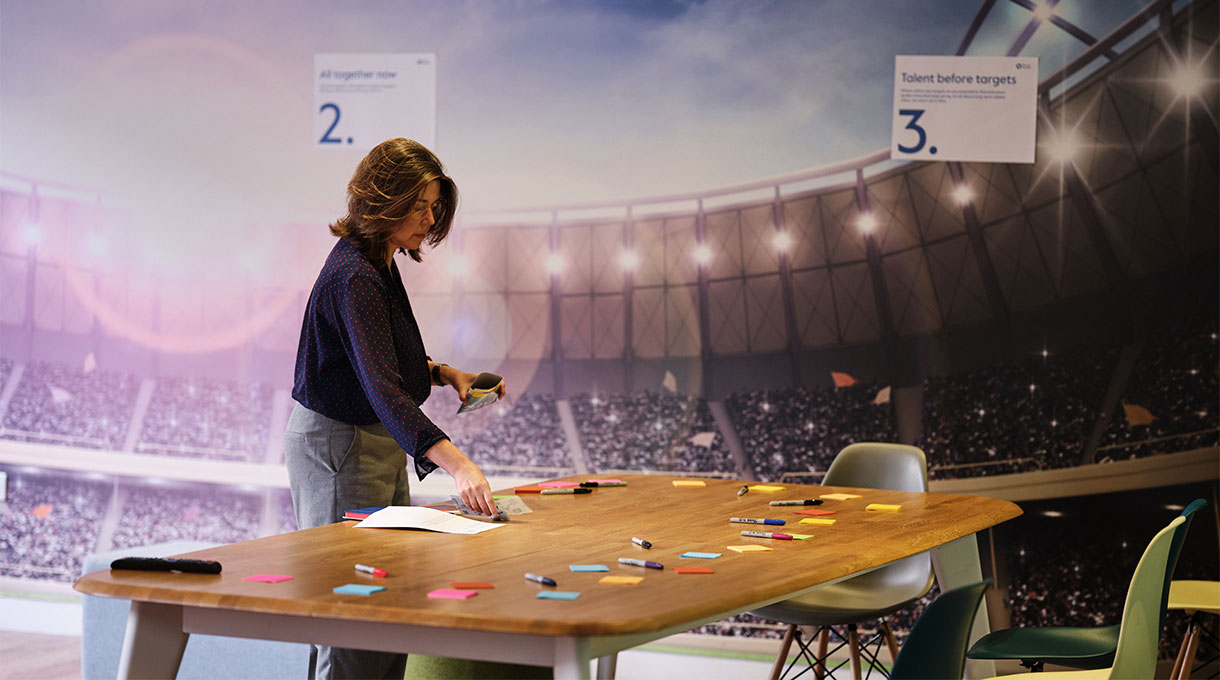
In our workshops, we use a visual exercise to explore this territory: Our Brand Perception Canvas™ is made up of three spaces, labelled Past, Present and Future. Before the session, the Present space is pre-populated with post-it notes drawn from brand perception surveys completed by internal and external audiences. Together, we then map what we know of the Past – both the things we’ve forgotten and the things we’d prefer others forget. Finally, we move ideas, truths and aspirations into the Future space: what we want to carry forward, strengthen or transform.
It’s a visual, participatory way to bridge history, reality and possibility and to make sure your brand strategy doesn’t just describe the future, but actively shapes it.

Finding the answers
Having explored each lens, the next step is synthesis – bringing everything into one view. Pausing to review, reflect and envision offers a wealth of insight. Clarity on what to hold on to, what to let go of and what to grow into emerges from that pause.
In the words of one of our clients:
After 23 years of challenges and successes, it felt like the perfect time to pause and reflect and think about how we tell our story for the future. The process helped us recognise our strengths and share those more strongly with our guests. That might sound simple, but it’s incredibly powerful.
Alison Howell, Co-Founder, Foot Trails, travel brand
On reflection
A good brand strategy doesn’t replace what came before; it builds on it. It recognises what’s still valuable, confronts what no longer serves and charts a course that’s both honest and ambitious.