
Resist the silver bullet
Change doesn’t always mean brand reinvention
I’ve noticed a growing nervousness around going for a full rebrand at the moment. And honestly, that feels entirely rational.
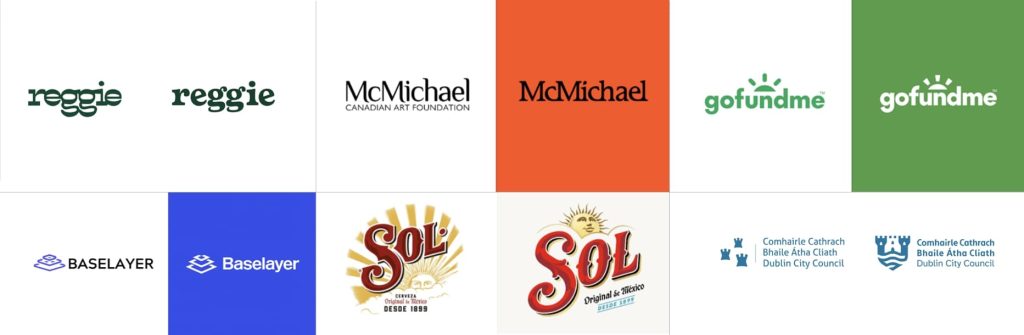
In Brand New – the weekly design industry review published by UnderConsideration – there has been a clear pattern recently: a move towards favouring refinements over wholesale reinventions. Logo adjustments. Careful identity updates. A sense of organisations protecting and developing what they’ve already built.
In an uncertain economic climate, that instinct makes sense. Hard-won brand recognition, awareness and trust are not to be gambled with.
But watching this pattern emerge raises a more fundamental question. When organisations reach for any sort of change, what is it that they’re really trying to solve?
Brand refinements are a bit like ducks on water. On the surface, everything looks calm – sometimes deceptively so. But beneath that calm, there should be purposeful paddling. Research, evidence, testing and judgement about what to hold onto and what to move on from should make up the very intentional forward momentum.

And there should also be acknowledgement that occasionally, that paddling reveals something uncomfortable. That the issue may not lie with brand at all.
The silver bullet instinct
In our recent Behind the Brand research, one key theme emerged: frustration with the idea that a rebrand is an easy-fix remedy.
There’s a belief that you just do a rebrand and the problem gets solved. People keep throwing it at the issue because they think, ‘That’ll fix it.’
— Director of Brand and Communications, racial justice charity
This didn’t mean that there was a resistance to change. It spoke of a resistance to rebrand being the default position.
From an organisational perspective, the more productive starting point is often diagnostic rather than creative. Why isn’t the existing brand working? Is it coming across with sufficient clarity, consistency and internal belief?
“You’ve launched it – now be consistent. If your team is fed up seeing the same image every day, then tough, because millions haven’t seen it.”
“In the early stages, be consistent. Live it. Give it time.”
There’s something in that honesty that’s worth a pause. Internal fatigue is not the same as external saturation. Teams see the brand every day; audiences don’t.
I’ve written before about the danger of discarding hard-earned brand equity simply because it feels over-familiar internally – of mistaking boredom for obsolescence. In many cases, what needs attention is not the core idea, but the discipline and consistency behind it.
In the third sector especially, where resource is finite and scrutiny high, a rebrand can feel like visible action. It signals movement, reassuring stakeholders that something is being done. But it isn’t the only way to mark a turning point or open a new chapter.
Change, fear and judgement
None of this is an argument against significant change. Sometimes culture shifts, strategy is redefined and the gap between who you are and how you show up becomes too wide to ignore.
The difficulty lies in recognising when significant change is unavoidable and when restraint, however uncomfortable, is the wiser move.
Well-judged refinement can be transformative, particularly when it sharpens clarity and strengthens distinctive assets. Equally, caution driven by fear can leave organisations stuck in cosmetic adjustment, never quite addressing the real issue.
The point is not whether to change, but whether the choice to do so is born of strong intentions.
Don’t reinvent the wheel. See what’s working, see what’s not working.
The advice may sound straightforward, but in practice, it requires evidence, candour and a willingness to look beneath the surface.

Brand as stewardship
The findings also drew attention to a particular aspect of governance.
All too often, brand only ever reaches boards at moments of visible change – a service launch, a re-positioning, a crisis. Yet brand strength is something that is shaped in all the in-between times, through consistent application and investment in capability.
If brand is treated as a periodic event, it will always feel unstable.
If it’s treated as stewardship, the need for wholesale intervention becomes rarer.
That stewardship includes:
- Supporting continuity, not just headline moments
- Planning for what happens after launch
- Building capability and systems for the longer term
- Choosing conviction over playing-it-safe dilution
Stewardship involves adopting a long-term perspective and a disciplined approach.
A shift in emphasis
We’re currently working on refreshing the identity of a long-established organisation with deep roots and a strong visual motif. There was never any appetite to discard what already carries so much recognition and trust.
Instead, the work has been about recalibration. Holding onto the code that signals continuity, while dialling up the emotional register of joy. Allowing the identity to move from heritage as something preserved, to heritage as something lived.
Not because change is fashionable. But because the strategy demands it.
That kind of shift is not dramatic from a distance. Like the duck, much of the effort happens beneath the surface. But when it is grounded in evidence and conviction, it transforms and strengthens the brand proposition.
Before you rebrand
If you’re contemplating a significant change to your brand, there are a number of questions drawn from our research project that are well worth considering. Answering these will help steer you in the right direction – be that recalibration and refinement or a wholesale rebrand:
- What exactly isn’t working?
- Is the issue visibility, clarity, capability or consistency?
- Have we truly embedded what we already have?
- Are we responding to evidence or to discomfort?
Sometimes the most strategic move isn’t a reinvention. But disciplined focus, sustained over time. Stewardship not showmanship.

You can read the full report here – readable online or downloadable for later.