
Why I love working with founders

Almost three years ago I did something to my own business that is usually reserved for my clients. I repositioned, renamed and rebranded my offering – going from being an agency business to a brand consultancy, supported by a team of freelance specialist collaborators.
Sitting on the ‘other side’ of the table proved to be both interesting and a little daunting. It was definitely a good thing to do because I now have some idea of how it feels to be my client! One of the most important things I did during this process was define my market – who I was a good fit for. In The Co-Foundry’s case, it’s mission-led organisations – founder-led, privately-owned tech and creative businesses, and third sector organisations.
And the first lesson I learnt? As I wrote back in the summer of 2021, defining the ‘who’ makes you much better able to articulate your ‘why’ because both you and your ideal clients care about the same things.

An entrepreneurial heritage
Looking back, I can also see that the connection with founders goes deeper than the discovery stage of my own rebrand. Although I’d never really connected the dots before, I come from an entrepreneurial family, from a grandfather who was a tomato-grower on Guernsey to a father who started his own business in his 40s, not to mention the years I spent running my design agency. I guess you could say that I get it – that need to establish and run a business to your own special recipe.
I can’t deny that working directly with founders offers some significant and immediate advantages – you get to sit shoulder to shoulder with the decision-makers, you can be pretty sure that your creative won’t be subject to the dreaded design by committee revisions and, because you already know they’re not averse to risk, a bold design approach, when appropriate, is more likely to be embraced.
But more than that, their having ‘skin in the game’ and being so focused on the longer-term means there’s something very special about working with founders. Perhaps it’s similar to the difference an architect or designer encounters when they work with someone who’s after creating their dream home rather than just an investment vehicle.
They love what they do
I love what I do. For me, it’s not just work but a driving passion and so it’s no wonder that I relate to others who love and care for their businesses too. These are people who want to get it right, who recognise they can’t do it all themselves and so build a team and a culture, and through that a future that demonstrates these wider ambitions.
The mission-led businesses I work with embody their founders’ singular vision. They’ve developed something that meets a need or solves a problem in a way that delights their customers. It’s something they keep top of mind but may have trouble articulating and reflecting in their branding. But of course, that’s where a good brand consultant comes in…
They’re creative (even if they don’t always know it)
Design is easily identified as being part of the creative economy but, to my mind, entrepreneurship and being a founder is (no matter what field you’re in) a profoundly creative act.
As Bernie Goldhirsh, founder of Inc magazine said, creating a business from nothing is ‘a kind of artistry…based on an ability to see what everyone else is missing.’ He also believed that entrepreneurial management required far more creativity from a founder than the grounding in rational skills that traditional management courses teach.

There’s a buzz
I found that reading Bo Burlingham’s book, Small Giants: Companies that Choose to be Great instead of Big really chimed with my thinking. In the same way that I see the founder-led companies I’m lucky enough to work with, Burlingham identified the ‘small giants’ in his book, as working to more than just financial objectives, ‘They were also interested in being great at what they did, creating a great place to work, providing great service to customers, having great relationships with their suppliers, making great contributions to the communities they lived and worked in, and finding great ways to lead their lives.’
All of this drive, enthusiasm and purpose means founder-led companies have a buzz about them, something that the book refers to as a state of being ‘totally in sync with [your] market, with the world around [you] and with each other.’ Getting your branding and values aligned is vital in maintaining this consistent emotional connection with your customers, team and community. It’s why our Values in Action workshops are so popular with the founders and third sector organisations we work with. The workshops ensure that branding is more than skin-deep – it becomes a code of conduct that’s embedded and lived by.
They understand that things take time
It seems that founders have quite a few things in common with branding consultants: They understand the importance of having a perspective or point of view on their market and a value proposition they believe in.
As Danny Meyer of now, not so ‘small giant’, Union Square Hospitality Group, points out, ‘At first, [your value proposition] is a monologue. Gradually it becomes a dialogue and then a real conversation. Like breaking in a baseball glove. You can’t will a baseball glove to be broken in; you have to use it. Well, you have to use a new business, too. You have to break it in. If you move on to the next thing too quickly, it will never develop its soul.’
They may be driven to succeed, but founders understand that brands take time to bed in – that brand-building is a long-term strategy – because they’re in it for the long term too. This makes working with them hugely rewarding, not least when you see how a rebrand revitalises a business or helps take it in a new direction.
How The Co-Foundry helps founder-led businesses
Our collaborative approach to working with our clients is in our name. As The Co-Foundry we work closely alongside our clients because we believe that branding is never something that is imposed or done ‘to you’. Our process is comprehensive and thorough and, as we’re reliably informed, time and again, great fun – with the workshop stages offering a chance for teams to bond and remind themselves of why they do what they do.
Over to the founders…
The clients we’ve worked with put it much better than I ever could (or should!):
Our new branding and messaging communicated that providing an ongoing, long-term relationship was central to how we work and this made what we offer different to what he’d get from another recruitment company. And that is exactly what we’d wanted to portray. I feel confident we’ll get a tenfold return on our investment over three years and, in addition it’ll stop us losing business.
Alan Furley, ISL Talent
We have true standout now. Before, we looked and sounded like any other web dev company – we needed to be bold, express our opinion and demonstrate our personality. we’ve got that now and it’s really getting us traction.
Simon Best, CEO, BaseKit
Together we were able to bring some much-needed clarity to our positioning and identity. I’m thrilled with the results and can’t wait to continue growing the business from the solid base they have helped us build.
Harry Cobbold, Unfold (digital agency)
You can’t be for everybody
As the saying goes, you can’t be all things to all people. Finding ‘my people’ – the clients I most enjoyed working with, that I could bring the most value to, has been the most liberating of the changes I made when I went from design agency to brand consultant.
Niching down and targeting founders (as well as mission-led third sector organisations) has not only increased my job satisfaction, it’s also helped me refine my processes and make more of my voice in the industry. And for those who might think that working with the same type of people is repetitive…?
Every client is different and so requires a carefully tailored approach. What your clients do all get to benefit from, when you niche down, is someone who truly understands their concerns and issues, and the values that are important to them. The patterns I see emerging add greater depth and meaning to the work we’re able to do with our clients, and so make for better branding all round.
Extending brand appeal beyond your traditional audience

At The Co-Foundry, the challenge we’re most frequently invited to solve, hangs on one key question: How can we extend our brand appeal to attract a younger audience without losing or alienating our existing followers?
We’ve been met by this request from charities looking to grow their donor base, cultural institutions wanting to increase their audience numbers, as well as travel companies seeking to attract a new, more adventurous customer.
Age is, of course, just one demographic and it would be vastly over-simplistic to assume there’s a single persona or set of distinct characteristics per generation. However, age often determines shared cultural references and preferences and, based on common lived experiences and social norms, these can be very helpful when reviewing your brand identity in a bid to give it broader demographic appeal.
Find out what you don’t know
It’s vital to go into the evidence-gathering step of your review with an open mind. Having a hypothesis is helpful but being open to learning from and responding to your findings is even more useful. Your brand may be long established and the people working in your organisation may feel they have a strong sense of what works, but switching the focus to discovering what it is that they don’t know, is key to broadening brand appeal.
Get to know the different generations within your audiences. Run brand perception interviews and surveys: Where do these groups hang out? What do they care about? What brands are they attracted to and why?
Once this leg of the research is complete, your brand design consultant will analyse how different generations perceive your brand (if indeed there are distinct differences), for example, the various motivations and needs your brand fulfils for them, the visual trends that attracted them to you in the first place. But they won’t just be looking for differences – the gold dust lies in the common thread that spans generational variations.
Look for a common thread
So, rather than focusing solely on the differences and building out of that, what you should be looking at is the glue that unifies generational appeal – the shared aesthetics, values and experiences. For example, while opera itself does not have as big a following among Generation X as it does with Baby Boomers, both generations share a love of and enthusiasm for live music in unusual venues.

Solos Holidays – When researching travellers’ generational motivations we uncovered a shared desire to experience a sense of belonging on solo travel trips, something that travelling alone in an organised group could deliver on.
Avoid stereotypes but seek patterns
Clearly defined generational groupings are becoming more blurred than in the past. But that doesn’t mean that creatives shouldn’t be on the lookout for patterns. Assumptions can easily be wrong and, as I said at the start of this post, age is only one demographic – contained within which is both nuance and a multitude of individuals.
In order to create truly resonant design, it’s essential that you ask your brand design consultant to conduct targeted market research, gathering feedback from the specific demographic you’re looking to target.
If forced to generalise, I’d start with the generational classifications below (intentionally focusing on years of birth from 1946 to 2012), with a reminder that these only refer to the age demographic. As soon as you start adding in any number of other factors, such as socio-economic, cultural or geographic considerations, their relevance wanes. Also key, is the fact that even within these generalisations, trends change and it’s the designer or consultant’s job to research audiences thoroughly – identifying what they like, what they care about and what other brands are competing for their attention.
A generational timeline: Baby Boomers to Gen Z
Baby Boomers (born 1946-1964)
Generally wealthier than the generations that follow on from them, Baby Boomers tend to seek quality and value tradition. This means that you should be looking for your brand to convey a sense of trustworthiness, reliability and authority via, for example, high-quality paper stocks and well-set typography with more than a passing nod to symmetry and balance. Baby boomers tend to be very loyal to their trusted brands and look for consistency in how the brand identity is applied. As a generation they’re likely to have poorer vision, so it’s important to use neat presentation, clear typesetting in legible type sizes, (avoiding low contrast) and overall, taking a straightforward approach with timeless and classic aesthetics.
Generation X (born 1965-1980)
Generation Xers are resistant to considering themselves ‘old’, something which plays out in how they favour modern aesthetics. They may have a fondness for cultural references taken from their formative years – ’70s and ’80s pop culture – but they generally tend towards a down-to-earth, no-nonsense approach that incorporates design trends more subtly. Not as drawn to flashy or overtly trendy visuals, they appreciate a mix of classic and contemporary elements. Generation X often values informality and may be put off by designs that come across as too formal or corporate. They appreciate brands that are approachable and relatable.
Millennials (born 1981-1996)
Similar to Generation X, Millenials look back as well as forward and have a love for retro-styling as long as it doesn’t veer into anything old-fashioned. To generalise, Millennials value authenticity and purpose-driven branding with a strong interest in community and social impact. They are drawn to brands that align with their values, demonstrate social responsibility and have a genuine mission, and they enjoy engaging and getting involved with these sort of brands. Designs that incorporate user-generated content, encourage participation, and build a sense of community are often well-received. Millennials are quick to detect inauthentic branding, are put off by companies that engage in “greenwashing” or are insincere in their commitment to social and environmental causes, and are more likely than previous generations to be averse to designs that overtly push branding messages. They appreciate subtlety and may be more drawn to brands that let their actions and values speak for themselves.
Generation Z (born 1997-2012)
Gen Zers are digital natives. They’ve grown up in a dynamic digital environment with constant stimulation as the norm (meaning that they find static visuals less engaging than previous generations). Their shorter attention spans are well-documented and bring with them the need for more ‘standout’ looks in brand design, i.e. design and brand language that can cut through and attract attention in a vibrant and dynamic social media world. Fun, informal and highly creative designs with immediate visual appeal are more likely to resonate. Gen Z look to being stakeholders in a brand and having a parasocial (what feels like a personal) relationship with it. To this end they seek out brands with an informal tone of voice that are highly relatable to them. Like Millennials, they value authenticity and appreciate brands that are transparent, genuine and socially responsible with a clear purpose and ethical practices. Diversity is a key value for Generation Z with inclusivity front and centre in imagery and messaging. Rejecting traditional gender stereotypes, they appreciate designs that represent a variety of perspectives, backgrounds and cultures, challenging and breaking free from age-old stereotypes.
Even the above, highly generalised timeline of the generations reveals common threads and trends that filter down through the generations. These sort of shared elements will be even more apparent when you drill down and get more sector, market and product or service-specific.
Design a flexible brand language
Once you have a strong sense of what will work, keep your core brand language (logo, colours, typography etc) consistent but don’t be afraid to vary your visual and verbal tonality and volume depending on who you’re speaking to. As an approach, this calls for a brand system that is adaptable; for example, one where you consider using pairs of typefaces – for example, one that’s contemporary alongside one that’s more classic. It’s important to provide detailed guidance on how and when to use the brand system to achieve the particular tone or effect you’re after.
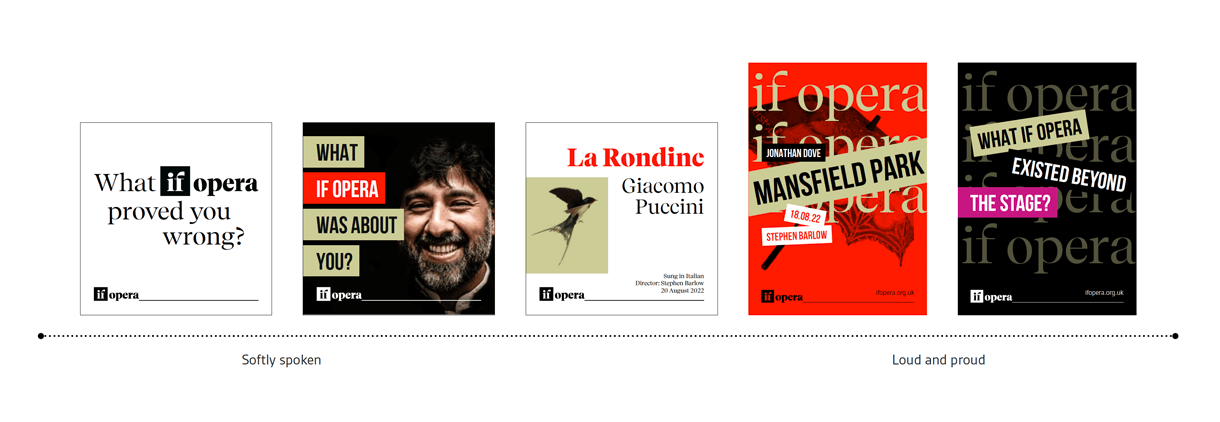
If Opera branding demonstrates (rather appropriately) volume range. On the left ‘softly spoken’ type-only treatments. On the right when speaking to potentially younger audiences, If Opera can afford to be bolder with the application of the branding.
Beware the risks change can bring
When embarking on change of this sort, it’s important that you don’t forget your existing audiences and loyal followers. Is a full rebrand really necessary? Too much change can alienate a possibly more conservative audience. As with any branding exercise, consider what will work for everyone, what assets can you retain or subtly evolve? Is it really necessary to start from scratch?


Discover the World – With this travel brand, we saw the opportunity to retain key recognisable elements from the existing brand, evolving and extending them to ensure they maintained brand loyalty and also garnered broader relevance – moving far enough to compete with new brands attracting a younger customer base.
Good design comes first, and lasts
Just as a good song can be loved across generations, good design will resonate with a broad spectrum of people. While awareness of generational likes and dislikes is important, don’t just chase trends – seek out good design solutions that will bring your brand identity lasting-power and longevity.

Quartet – a strong brand idea appeals to all. In this instance the client wanted to tap into a new generation of prospective philanthropists from the vibrant tech and creative economy in the West of England. While the resulting brand identity is fresh and contemporary, it’s underpinned by a strong brand concept whose meaning and depth means it has also been received really well by the existing donor base.
Take people with you
Whatever path you end up taking, when you’re looking to make changes that extend generational appeal, you have to ensure that you communicate the reasons behind the change – why it’s important to the success (maybe even survival) of your brand. Ensure that every stakeholder and every member of the team, from front-of-house, customer-facing individuals to those behind the scenes as well as your trustees, volunteers, partners, customers and clients, understand why it’s being done.
This is where the evidence-gathering and consultation steps come into their own. They give you the confidence to prove that you haven’t acted on a hunch but have fully engaged with your audiences both ‘old’ and new.

American Museum & Gardens – Following the renaming and rebranding of the American Museum and Gardens, we produced a short publication for staff and volunteers that outlined the brand rationale and key motivation for change. Extending the brand offering meant a name change and the opportunity to appeal to a younger family audience.
Authenticity is everything
One value whose importance spans the generations, from Baby Boomers to Generation Z, is authenticity. Being authentic and not forcing your brand into an identity that isn’t a true reflection of what you stand for, builds trust, respect and a strong reputation, as well as making you relevant and relatable.
If we think of it in terms of people in the public eye that we might be familiar with… Sir David Attenborough and Sue Perkins are very different but, in being true to themselves and allowing their personalities to come to the fore, they are able to garner cross-generational appeal. Brands, in this instance, are not that different from people.
Don’t throw your brand baby out with the bathwater!
I often find myself being invited to assess a brand identity; the meeting we have might go something like this: The client knows they have a problem and sometimes they’re able to articulate, at least in part, why that is. But, having already gone through an extensive branding process, maybe as recently as within the previous three years, they’re cautious about what should happen next.
There’s understandable anxiety around throwing good money after supposedly bad. After all, something hasn’t worked out with the not-so-long-ago completed branding. There’s also an awareness that they might not want to scrap everything and start again – throwing away what’s valuable (their brand baby) out with the bath water.
Under scrutiny
And it’s not as if I haven’t been at the sharp end of this myself…
As well as being the brand consultant brought in to assess a supposedly faltering brand identity, I’ve also found myself on the receiving end. I was recently told that a rebrand we’d completed no more than six months earlier, following months of research and discovery, and an extensive design process, was being scrutinised by an agency owner invited in by the company group.
Confident that this was a definite case where the client would have done better to steady their nerves and give the rebrand more time and support, I thought the experience presented an opportunity to write about the subject of how you can achieve a level of certainty about determining what the problem actually is, and the solution that’s called for.
The question is, do you actually need that full-scale rebrand or something altogether more nuanced?
Give it time
First of all, it’s important to remember that the sort of changes a successful rebrand can yield don’t happen overnight. Chopping and changing things only causes confusion and damages your brand equity. Branding is never a case of ‘done and forgotten’ because you shouldn’t leave your brand to fend for itself out in the wild.
A brand not only takes time to bed in, it also requires you to actively check in on it. Checking-in might include a number of elements such as examining whether the intentions set at the outset are being realised and assessing how the rebrand is landing with audiences. It’s an important exercise because all sorts of outside influences, from the wider economic and cultural, to the sector-specific, will be having an impact on the fortunes of your brand.
But of course, when doubts remain and the checking-in exercise yields more questions than answers, it’s probably time for a brand review.
What is a brand review?
A brand review is a comprehensive, 360° audit of the state of your brand. It asks a whole range of questions, from those that are external-facing (Has the world shifted? Do you need to evolve with the changing cultural landscape?), to those that concentrate on looking at what’s going on inside your organisation (Have you developed a new service? Has your business strategy or positioning, i.e. where you stand in the market, changed?).
A brand review will help you find out if there really is a problem and will articulate any issues precisely. This means that you’ll discover if a full rebrand is on the cards or whether something more nuanced is called for – a minor adaptation perhaps, or maybe just more time for your brand to become known in its new guise. And, if there is a fundamental problem, it’ll help you determine the direction your rebrand should take you in.
So, if you’re being plagued by doubts about how your brand is doing, particularly if it’s not that long since you last rebranded, or if you’re worried that you seem to head for the drawing board at the first sign of trouble, read on to find out how taking stock and conducting a brand review worked out for one of our clients.
Getting to the heart of the matter
Recent months saw us working with a charity client that had fundamentally changed their way of working, from focusing solely on end-user beneficiaries, to expanding their focus to take in both end-users and service commissioners and partners. Their existing brand identity wasn’t able to accommodate or resonate with these two distinct audience groups.
In addition, the client was experiencing issues with brand application – brand rules were being broken and they didn’t know why. We were tasked with finding out how the changes that were necessary (i.e. evolving existing branding so it was meaningful to both its distinct audiences) could be introduced as smoothly as possible, ensuring the sort of consistency that would build the brand awareness they were after.
This is how we went about it:
Conducting a brand review
As is generally the case, our brand review covered five distinct areas, starting with the all-important…
Scoping session – an in-depth analysis of the client’s hypothesis regarding issues with the brand identity, including individual conversations with members of the client’s team.
Consultation process – this included surveys and interviews with the client’s target audiences (the latter, to hear, in their own words, how they felt about the brand, its comms and identity – this was conducted in a non-leading way).
Review of the category – a thorough examination of the category the client operates in and the wider environment. This included looking at how competitor brands present themselves and identifying any new entrants and competitor brands that have recently refreshed their brand identities.
Auditing the marcomms – this covered all aspects of website, print, social and large format media. We also thoroughly reviewed the brand guidelines and templates with a focus on why brand rules might be being broken.
Making recommendations – we presented the evidence gathered and proposed the way forward.
Next steps – our client’s experience
Our findings unearthed additional evidence to back up the client’s initial prognosis while revealing further opportunities to get their branding to land right, once and for all, without having to embark on a full rebrand.
Their target audience had felt the existing branding and messaging lacked warmth and depth, and there was uncertainty about what the brand stood for.
Recommendation:
The client needed to get clear on what they stood for and cared about.
Action:
We ran a series of discovery workshops to draw out their mission, vision and purpose, and define their personality and essence – a conceptual hook that any new creative could hang off.
The brand identity felt too playful and flippant.
Recommendation/action:
Retaining the logo and the established, recognisable bones of the brand system, particularly the primary colour palette, while approaching other visual elements such as illustration and photography in a new, more emotive way that was easily replicable.
The inconsistent brand experience was revealed to be a result of limited brand guidelines which meant that the charity’s regional offices were being given insufficient direction.
Recommendation:
Build greater detail into the brand guidelines (eg how to write the brand name in body copy), extending this to include direction on commissioning and selecting photography, and the development of sub-brand architecture.
Action:
The client took the above recommendations on board and went much further, building a team of marketing and brand managers tasked with managing the brand identity and protecting brand equity.
You don’t always need a revolution
It’s not always necessary to make a radical change. In our charity client’s case, it was a matter of the brand identity evolving so that it could accommodate the way the charity itself had evolved. As well as this, the brand system needed to be documented in a more thorough and user-centric way.
Rebranding would have been a case of throwing ‘the brand baby out with the bathwater’. The brand review findings presented the client with the ideal opportunity to step back from their brand and gain a deeper insight into how it was being perceived by their audiences. They were then able to make an informed choice on how to proceed.
Benefitting from a change of perspective
One of the most significant things which the client took from our brand review was that there is such a thing as being ‘too close’ to the brand.
Of course, it’s great when people say things like, ‘we live and breathe the brand’ but it does mean that they’re more likely to get bored with it and therefore want to change it. Stepping back and seeing the brand from the point of view of their audience, enables a reboot. For the people they want to reach, familiarity with a brand creates not only trust but preference. It’s cognitively easier to choose something you’re already aware of and have built an association with.
This is a phenomenon that was identified in the 1960s by social psychologist Robert Zajonc as the ‘Mere Exposure Effect’. More recently, via the work of Byron Sharp and Jenni Romaniuk of the Ehrenberg-Bass Institute of Marketing Science, it’s referred to as the concept of ‘mental availability’ – something which is reduced when you continually meddle with your brand.
Getting the right people to ask the right questions
Discomfort or dissatisfaction with how a brand identity is performing should prompt questions. The important thing is to keep calm and examine what’s behind any motivation for change. Is it being driven by external or internal factors, or a combination of both?
Once you understand that, you have a better chance at arriving at a solution that doesn’t undo existing brand equity. Being mindful of who you get in to assist in this, also helps. Agency owners come with an inbuilt interest in advocating for ‘radical change’, i.e. a full rebrand. An independent consultant is more likely to direct you towards what you actually need. Paraphrasing the saying, ‘less can be more’ – a subtle change might just be the powerful solution you’re looking for.
‘Hush little people. Just go shopping. We’ll fix it.’

Hope, about the state of the world in general, is not easy to find at the moment. So, it was inspiring, energising and enlightening to read ‘Citizens’, a book that is full of hope for a future that we can all have a hand in creating.
Turbulent times
The last seven years since the 2016 Brexit vote, have seen me, along with so many others, resort to feelings of what has been dubbed, ‘learned helplessness’: That despite our best efforts, we’re too small and insignificant to make a difference and that any change has to come from ‘the powers that be’.
It’s difficult to see how a single vote once every four or five years can address the myriad of real and pressing concerns that require long-term solutions. It’s also ironic how, despite localism being firmly on the agenda for over a decade, local government now seems less relevant than ever.
And, as a business owner, living in this era of climate emergency and feeling it incumbent on me to make changes and operate as sustainably as possible, I’ve been questioning the very concept of growth for growth’s sake for quite some time.
Time to tell a new story
A sense of disquiet, disenfranchisement and disappointment is growing. We’re realising that taking to the streets to protest doesn’t seem to make much difference and voting with our wallets changes little.

My daughter and her friend protesting against Brexit ©New York Times
And that is ‘Citizens’’ jumping off point: The source code that our society has been built on for more than one hundred years – the Consumer Story – is broken.
‘Citizens: Why the Key to Fixing Everything is All of Us’ by Jon Alexander with Ariane Conrad sets out an alternative narrative – the Citizen Story.
It’s also a rallying call urging us not to permit turbulent times and uncertainty to drag us back in time and allow the Subject Story to gain ascendance. (Although it’s also acknowledged that that idea of accepting a “Strong Man” leader has unfortunately seen some resurgence in recent years, eg Trump, Bolsonaro, Modi etc.)
Why the Consumer Story isn’t working
The stories imprinted on the collective consciousness of societies are important because they influence how we understand ourselves on a very fundamental level. They ‘shape our beliefs, our morality, guiding our behaviour and even constraining the possibilities we can imagine’.
In the Consumer Story, those in positions of power, whether they’re corporates or governments, regard individuals purely as passive consumers. They do the important work of sorting challenges for us while we ‘go shopping’. This consumer logic extends into every aspect of society. Self-interested, self-reliant and atomised, we’ve been led to believe that the solution lies with merely choosing the ‘right’ ethical brand:
The story that promised our liberation has become our prison – we are depleted, the world is depleted
That so-called power to choose with our wallets ignores the fact that real power lies in being able to shape the choices on offer.
The Citizen Story is already happening
The book delves deep into a diverse range of Citizen Story-led projects from around the world that are already making a difference. The transformative potential of seeing ourselves, alongside businesses and third sector organisations, as participatory entities is powerful. Whether it’s contributing to product development, or recasting donors or members as active participants in delivering an organisation’s purpose, it forces us away from the passive and towards a can-do, active citizen mindset, with the resulting benefits and shared value accruing across all stakeholder groups.
I’m pretty sure it’ll prompt you to join the dots and get better at recognising not just the Citizen Story examples you come across in your own life but also make you realise you’re doing better than you think. For example, I can now trace how The Co-Foundry’s collaborative ‘brand design strategy developed with you and not done to you’ mission has seen me evolving towards developing ever-more inclusive design practices.
My big takeaway
As a brand design consultant, what struck me most about the Citizen Story was how its adoption demands far more from the sometimes over-used and often wrongly-used word, ‘purpose’.
The world of brand strategy itself throws up many debates around brand purpose – never more so than when for-profit organisations indulge in a spot of purpose-washing. This book calls for purpose to become a true organising principle, embedded in the meaningful context of businesses, organisations and governments building platforms from which to deliver the resulting shared value:
‘…it’s about creating structured opportunities for people not just to buy products and services from the business, but to buy into what the business is trying to do in the world. It’s only when this happens on a widespread basis that the story that businesses are telling will truly change.’
In the Citizen Story, purpose is fuelled by involving audiences who, through their involvement, become participatory stakeholders. This very idea of greater stakeholder involvement is something that I’m keen to keep building into my processes.
How we get there
Big on detail, ‘Citizens’ sets out seven steps that will help in building those effective platforms from which to deliver this new way of doing business. It also expands this idea out of the corporate and organisational sphere to ensure that the Citizen Story changes government itself – where people aren’t just subjects or consumers but capable, resourceful and responsible individuals who organise to come together and have opportunities to shape our communities and how we live.
There are reasons to be hopeful already because so many Citizen projects – across the third sector, business and government – are changing things and proving their worth. The capability is undeniably there but what’s needed now is a push towards creating the conditions and adopting the stories that’ll bring about a more systemic change.
Changing the status quo
‘Citizens’ offers a clear path out of that awful, soul-sapping ‘this is just the way things are’ feeling of impotence. Having read and returned to it more than once, I feel I’m better equipped to underpin my business processes with Citizen Story thinking.
Read it, share it and talk about it! We need to put a stop to reacting to today’s challenges with 20th century, buy–your-way-out-of-trouble Consumer Story answers (eg Eat Out to Help Out) and make the Citizen Story the dominant code of the 21st Century.
Originality, trends and trademarks

Picture this: You’ve taken the decision to overhaul your brand. You know that a brand refresh or full rebrand represents a mighty undertaking – financially, commercially and culturally. It’s vital that the new identity lands and has the right sort of impact. Having committed to making that change you know that it’ll trigger all sorts of thoughts and emotions, from insecurities and doubts, to fears that might get in your way.
Now, go a little further down the line, your creative agency has just presented you with their vision for your brand identity. Your first feeling might be one of elation but what comes next often goes a little like this…
Cue, path-blocking objections and concerns: ‘Is this creative original?’ ‘Haven’t I seen something like this before?’ ‘Will it last longer than the last brand identity we did?’ ‘Is it too ‘now’, of its time and faddy?’
Or, your elation might have frozen you to the spot with thoughts along the lines of, ‘This is fantastic, how can we make sure we own it, protect it, maintain it and build its value?’
You may even vacillate between the two and that’s ok, because there are a lot of factors at play here. Change and uncertainty are not meant to feel comfortable but you have to accept that this sort of discomfort is all part of the process.
They want proof that this is really, really gonna work. The problem is there isn’t proof. It’s [down to] how people see and perceive and accept things.
Paula Scher, Pentagram
As with any blocked path, it’s worth taking small steps to overcome the obstacles, so let’s break those reactions and conflicting emotions into three categories and take them on one at a time:
- Originality
- Trends vs fads
- Trademarks.
1. Originality
Why is the desire for originality or novelty so important? The purpose of originality is to be innovative, be the first, bring something fresh to the market, stand out and so ultimately gain an advantage. But can we ever truly be original and does it matter as much as we might think?
No discussion on originality is complete without this quote from Mark Twain:
There is no such thing as a new idea. It is impossible. We simply take a lot of old ideas and put them into a sort of mental kaleidoscope. We give them a turn and they make new and curious combinations. We keep on turning and making new combinations indefinitely; but they are the same old pieces of colored glass that have been in use through all the ages.
Mark Twain
And this of course stands true in the graphic design world of brand identities. Our visual language is naturally limited to what we can see: shapes, letterforms, pictographs and even colours. Seemingly infinite, they can only ever be grouped into a limited range. What makes them appear fresh, new and different is how we combine, express and apply them.
A colour wheel can be broadly broken down into 12 groups:

There are only a limited number of geometric shapes in the world:

When it comes to pictographs we can go back to prehistory to see how humans used them to communicate (Image: Robert Brewster Stanton in Glen Canyon, Colorado River about 1893):

While Mesopotamian ‘graphic designers’ were limited by their rudimentary tools, we too are restricted by the requirements of the digital world – forced to reduce shapes down to their simplest forms – which again reduces the opportunity for expression and detail, and therefore variation.
16px favicons are one of the smallest sizes a logomark needs to be legible at:

Original logomarks
Seeking to be distinct within your category is almost always a strategic goal. However, you may choose to take the opposite path – wanting to make your product or service feel familiar. In this case, you might don the clothes of more established brands, or borrow from and reimagine established industry norms.
For the purposes of this post though, let’s assume being distinct is your objective. If that’s the case, then a decision needs to be made as to how distinct you’re looking to be beyond the category you operate in. In my opinion, it doesn’t matter that, in the following example, Pepsi and Korean Air have remarkably similar marks. After all, they operate in significantly different spaces and look different in application.


In contrast, I think Meta has demonstrated a lack of imagination with their infinity sign. An infinity symbol in itself is naturally going to be part of our universal language and therefore often used, but in the tech world the symbol is overused. It also bumps up a bit too close to Virgin Media which is also active in the entertainment and digital spaces.

I never fail to be amazed that Gucci and Chanel arrived at such similar marks given that they sit side by side in the designer bag sections and perfume and make-up counters of department stores. Much has been written about the homogenisation of luxury brands – it’s a category that is ripe for some disruption.

Original motifs
Now let’s take the pictograph of a bird as an example. Covering a diverse range of sectors, the following brands don’t need to play or fight in the same commercial space.

And one poor soul – our trusty Twitterer has been unceremoniously knocked out of their nest – the owner clearly not recognising the value inherent in that now familiar shape.
Airlines are naturally drawn to the motif of birds in flight. So, while the use of a bird motif is not original, differences are communicated through the expression of that idea. Japan Airlines has used the stork in a roundel since 1959 – it feels culturally appropriate (a meaningful symbol in Japanese arts and culture), distinct and memorable. Clearly though, the airline category more broadly, could look further afield for inspiration.

When designing the identity for Skylark Media we were of course aware that using a bird motif was not an original idea in itself. Within that category however (video production studios), our research revealed that this could be an original approach, while incorporating the bird into the serif of the ‘K’ reinforced the fresh, new treatment of the motif. It would have felt remiss not to play on the film production company’s name.

Monograms
Inevitably any monograms (single letterforms) will have a shared resemblance. In this particular case, a Hong Kong fashion school and an Italian rail network are in no way in the same competitive space.

But it’s how these two brands are applied that also helps to differentiate them.

Naturally a fashion brand needs the freedom to evolve over time, and the agency Toby Ng Design has given the client the ability to change the branding as trends and fashions change. Genius!
And that leads us neatly onto our next category: trends vs fads.
2. Trends vs fads
If it’s classical timelessness you’re after, then selecting colours and typefaces that are long-established is a safe bet. To be super safe, choose to avoid stylised motifs, because even the expression of a motif can date.
However, if your brand strategy calls for a contemporary look and feel, one with broader appeal that’s possibly looking to attract a younger target audience, then you’ll want to be more ‘of the moment’, part of the zeitgeist. In this instance, your designers will need to walk that fine line between being on trend and referencing what might be a short-lived fad. So what’s the difference between trends and fads? A starting point is to look at the dictionary definitions for both each:
Trend
1. a general direction in which something is developing or changing.
2. A fashion
Fad
an intense and widely shared enthusiasm for something, especially one that is short-lived; a craze.
The danger of a fad is inherent in its dictionary definition. There are of course opportunities for short term campaigns to ride on fads, but as we’re exploring overarching brand identities here rather than focusing on one-off marketing campaigns, it pays not to take a short-term approach: Brand identity recognition, awareness and recall build and evolve over time, and there’s a danger that, in being so of the moment, one moment, you’ll appear dated in the next.
Trends come and go but this usually happens in much slower cycles than those around a fad. And very often their reference of the past is deliberate and strategic.

As shown in this Cisco ad, the use of dynamic ‘living lines’ feels very on trend. It isn’t a novel idea (see the example on the right from 1967) but its application does feel ‘of the moment’. I don’t believe it’s going away anytime soon either because it isn’t stylistically ‘out there’ in a way that might date it.
Distinguishing between a trend and a fad
Fads often emerge suddenly, gain rapid popularity and then quickly fade away within a short time frame (typically less than a year). Trends, on the other hand, tend to evolve more gradually and can persist over several years.
Trends are often rooted in societal shifts, changing consumer behaviours, or advancements in technology. They address underlying needs or preferences which can make them more sustainable over time. Fads are usually driven by novelty and excitement, and lack the substance to endure.
Trends tend to have a broader and more diverse appeal, attracting a wide range of demographics. Fads may have a specific target audience and appeal to a niche group for a brief period.
Ultimately, determining whether something is a trend or a fad requires a combination of observation and understanding of the broader context. It’s worth noting that even experts can sometimes make poor judgments, as the distinction between the two can be complex and influenced by various factors.
On trend or derivative?
There is a difference between designers being on trend and being directly derivative. However, with the echo chamber of Pinterest’s algorithm throwing out the same visual reference over and over again, this is happening more and more but through osmosis rather than because of deliberate copying. In this short video Derren Brown demonstrates how susceptible people are to the influences they surround themselves with:
However much they may be influenced by their industry or find the work of award-winning peers attractive, an established, professional designer is highly unlikely to copy an existing visual concept.
A good designer keeps their field of vision wide.
Build in checks and balances
A professional designer will factor due diligence into their practice, alongside researching the client’s category.
Tip: sometimes brand identities are put together at pace and iterations are requested at the last minute Build enough time into the project to allow for checks to be run at every iteration round. Bear in mind that designers are not IP Lawyers – they do not have legal expertise or database search capability, so if differentiation and protection of your new identity are of vital importance to you, read on.
3. Trademarks
This post is not written with FTSE 100 corporations in mind, it’s aimed at third sector organisations and SMEs with more limited budgets – organisations and people with a dynamic mindset and a more pragmatic approach.
Of course, if you’re CocaCola or a similar concern such as Intel, you would go so far as to register the shape of your bottle or audio identity. But do you need to formally register your identity?
Anyone can pop a ™ on the end of their brand name but only a fully ® Registered logo will carry enforcement rights.
Before you file your design application – ask yourself, is a trademark Totally Meaningless™ or Really necessary ®. Once you’ve registered it, will you maintain an enforcement strategy, monitoring any conflicts and infringements? If you aren’t prepared to invest in monitoring and enforcement, is there any benefit to registering?
In conclusion
A trend or concept that is familiar, tried and tested may make us feel more confident and reassured about the design direction. There’s nothing wrong with that. There is very definitely a sliding scale for designs – from designs that are novel (if not original) and challenge the norms, to designs that regurgitate fads – the graphic design equivalent of fast fashion. The balancing act is about reconciling the facility for sustaining an identity over the long term while satiating the appetite for something new and different.
Don’t follow fads. Stay true to something that you understand and have a principle about and try to grow it.
Paula Scher
Design decisions have to be made based on meaning and relevance. Rather than searching for originality ask yourself, is this on trend, a fad, or stylistically derivative? Does it feel true to our brand essence? Does it hold meaning? Paula Scher again, on authenticity and pushing the brand down a new path: “The goal is to make them look like them, but allow them to feel comfortable that they’re going out to the party. Not overdressed, not underdressed, they’re them. That’s what I care about. Raising it, creating a surprise, moving the needle.”
Designers and clients have a shared responsibility to widen their terms of reference – going beyond award-winning concepts in design-trade press, avoiding falling down Pinterest rabbit holes and arming themselves with knowledge of design history. Or, put more simply, looking up and drawing on inspiration and reference from all around you.
Stop obsessing over novelty. Instead, focus on value. Even if your idea is not new, your unique perspective and spin could create something the world needs.
Stephen Shapiro, Innovation Consultant
Towards an inclusive creative process in brand identity design
The worlds of digital, product and service design are familiar with having end-users and customers involved in defining, testing and developing inclusive and accessible experiences. In brand identity design such involvement may be much less common but I don’t believe that that should remain the accepted norm. Always open to learning and developing my processes, I’m on a journey of discovery – exploring how I can ensure that The Co-Foundry takes a truly inclusive approach towards creating brand identities fit for the 21st Century.

Many might not be enough
Solving a branding brief can be done in any number of ways – there is never one single solution. But despite there being multiple angles and possible approaches, it’s not unusual to find that insufficient differing perspectives get explored during the strategic and creative stages of a project – something which can result in assumptions being perpetuated and generic solutions being delivered. And although no one sets out to deliberately exclude underrepresented voices, that thing where you assume your knowledge is all knowledge, is an easy trap to fall into.
Socially-conscious, human-centred businesses, institutions and organisations already understand the importance of listening to more than just the loudest and most dominant voices. They actively cast their net wider and ensure that individuals and minority communities get heard too. As brand strategists and designers, we should make creating space for, and listening to these diverse and underrepresented voices, an integral part of our practice too.
Towards inclusion
In this post I want to track the stages of a ‘typical’ brand project, identifying where we can embed inclusive practices and, in this way, exploring how brand designers, strategists and their clients can take practical steps towards a more inclusive approach.
Considering how brands are experienced by a more diverse range of customers and potential customers in the real world will lead to insights that then help create more meaningful and more widely resonant brand identities. These can, in their turn, contribute to extending brand reach and improving a brand’s accessibility and appeal across, for example, demographic divides, divergent thinkers, abilities and religions.
What’s the problem?
A 2022 study by the Design Council found the UK design industry in good shape but with a buoyant growth trajectory not being matched by a growth in diversity. More recently, speaking at Clerkenwell Design Week, Design Council CEO Minnie Moll spelled this out, saying, “only 23% of designers in the UK identify as female” while “88% of design managers identify as white”. It’s something I’ve written about on The Journal over the years here and here.
Inevitably, we’re all sometimes guilty of only viewing the world we live in from our own limited prism. So how can we ensure that the light we refract takes in the full gamut of possibilities and experiences, and not just a limited palette? How can we shine a light on underrepresented communities, reflecting life as it really is and ultimately driving change?

The False-Consensus Effect: Designers, developers, and even UX researchers fall prey to the false-consensus effect, projecting their behaviours and reactions onto users – this is an illuminating read that differentiates between accessibility, universal and inclusive design
Why does inclusivity matter and how can it benefit your brand?
Apart from being an ethical, respectful, empathetic and positive way to design, there are several strategic reasons why inclusivity matters. In UX and CX design there is already a broad consensus around inclusive design extending market share and accelerating innovation, so how can inclusive brand identity design benefit the brand, and the audience it serves?
Key benefits of adopting inclusive practices include:
- Your brand becomes accessible (in the widest sense of that word) and relatable to more people
- You develop a deeper understanding of the people you serve
- You break out of category assumptions and create something more innovative, differentiating your brand in the process (something that’s a powerful brand attribute)
- You build stronger brand loyalty by fostering a sense of belonging
- You address your audience’s needs and increase your credibility
- You increase market share – for example, 20% of the UK population has a disability
- You attract the very best talent from the widest pool in an authentic and not merely performative way, building an inclusive brand identity that mirrors your pledge to diversity.
In other words, from a commercial perspective, you increase your brand value and drive higher brand engagement.
How to integrate inclusive practices into the project process
An inclusive approach starts not just with knowledge of your audiences but with knowledge of yourself.
The path to greater inclusivity starts with asking yourself: “Who might I be excluding with my design decision?” (Jeff Zundel, LinkedIn’s Inclusive Design Advocate). We need to recognise and acknowledge our own unconscious bias and begin with an open mindset, whether that’s through unconscious bias training or simply respecting and being open to the opinions of others.
So, start with the question: “Who are we not reaching or serving?”
Educating yourself on how current events and public discourse impacts the people you intend to reach is important too, but nothing beats actually consulting and working alongside your stakeholders.
Let’s look at this from a ‘typical’ brand design process and see where we can bring voices that may have previously been left out, in.
Project
kickoff
Define
Define the problem you need to solve:
- Who do you serve and who on the client or creative team is under-represented in that audience.
- What it is that you want to find out.
- Where are the gaps in your knowledge?
Research
& discovery
Listen & learn
Find out what perceptions and misperceptions people may have about your brand. Use this step to build clear personas for designers to reference when designing, gather insights and plan how your brand can take those people’s needs and perspectives into account. To do this recruit a diverse and representative group of participants. Carry out your consultation using methods appropriate to the participants, for example, focus groups, 1:1 interviews and workshops.
Take care to ensure that the methods and media you use are accessible to everyone, including those who have disabilities or are neuro-diverse. This might involve providing alternative text for images, including breakout groups or 1:2:1 interviews. These meetings can take place online or in person. (More detail on this in the Appendix.)
Strategy
Co-author and cross-check
Co-author and cross-check the brand strategy
Look for alignment in defining your vision, purpose and values. Do your audiences share your vision and values? Might they feel that your day-to-day actions contradict the ideals you espouse? This step is important because your audience will rightly call out hypocrisy, and it’s better to discover and address this now, rather than later when the refreshed brand is launched.
Develop your brand’s value proposition, focusing on your audiencs’ pains and gains, and how they are resolved by your offer.
Creative
brief
Co-create
Provoke a response by providing stimulus (sketches, moodboards and competitor reference). This step is not about validating ideas but about provoking a response and using that response to write a brief.
Specify
Be specific in your brief, it’s not enough to say, for example that “this project should be ‘diverse and inclusive.’” Instead, you might say “20% of the brand’s audience in the UK are from a non-white background, the overall demographics of our branded content should reflect this.”
Design & content
development
Design
Avoid limiting and excluding imagery. (See notes in the Appendix.)
Consider visual and verbal sensitivities, for example, gauge the power dynamics of your message – take care not to make your brand the saviour or the hero.
Validate
Test the resonance of the design and messaging, and be willing to make changes based on stakeholder feedback.
Brand
guidelines
Guide
Check all text is accessible in the brand colours. Provide guidance on typography, for example, rules for use of fonts for people with partial sight and dyslexia.
Consider providing a language lexicon of exclusive language as part of your tone of voice guidance.
Create and curate an inclusive image library that creative partners and staff can use to stay on brand. (See more on this in the Appendix).
Application
Ensure people remain the mainstay of your design and content process even after you hand over the guidelines. Consider setting up a steering group of engaged stakeholders to review collateral as you roll it out.
In short, design with stakeholders, not just for stakeholders.
Conclusion
We need to remember that, “If we have privilege (white, male, cisgender, heteronormative, able-bodied, etc.), we bear a larger burden in listening with empathy and responding with humility.” (Real the full article that this quote is taken from, here.)
It’s time to pass the mic to those who have, for far too long been marginalised and excluded, and amplify their voice so that we produce more progressive brand experiences where inclusivity is a core practice.
Diversity is a fact, inclusion is a practice, equity is a goal.
Dereca Blackmon, President, Inclusion Design Group
Do you have anything to add?
I know there’s still a huge amount of work to be done and I’m far from pretending to be an expert on the matter but I am committed to continuously improving and using my position as a brand consultant to encourage an inclusive practice in research and creativity. I know many people reading this will have advice and experiences to add, so please do share them with me and I will come back and update and add to this post.

Appendix
Running inclusive workshops
Facilitate the sessions in such a way as to ensure that everyone has a voice, or you may end up only listening to some of the participants. Many participants will find themselves more comfortable discussing in smaller groups, so consider using breakout rooms.
Use a Parking Lot – a space where the facilitator can ‘park’ ideas and points on post-it notes. This prevents any one/more attendees from dominating a discussion. State at the start of the session that you have limited time and may use the Parking Lot to keep things moving.
Consider a method of feedback for people who are more introverted, for example a box for them to post their thoughts throughout the session.
Keep a note of particularly engaged and enthusiastic attendees, you may want to approach them further down the line to cross-check, validate and test.
Commissioning or sourcing diverse Illustrations
Illustrators sometimes bypass the representation of skin colour or ethnic diversity by avoiding it altogether or using unnatural skin tones. The intention behind this approach is to be inclusive but the result is quite the opposite. By omitting natural skin tones, these illustrations inadvertently look like white people which excludes everyone else.
Unless there is a stylistic reason that makes non-human skin tones necessary, choose human skin tones. Thankfully this homogenous trend, dubbed Corporate Memphis is less prevalent now, and brands like Hinge have moved away from this style.

Inclusivity is about so much more than race – hair, facial features, body type, environment, clothing and activities all contribute to expressing one’s identity. For instance, the environment the characters are depicted in can convey their socioeconomic status. Consider all of these aspects.
Google are leading the way with their work on inclusive marketing, an example here:

Photography
By selecting carefully and sensitively, you can enhance the emotional connection of your audience. Seeing themselves in the images you use, may help them connect with you on a deeper level. While on the one hand, designers mustn’t avoid diversity, it’s equally important not to overplay it. Be representative, if the audience you serve is mainly white, in a mainly white region, don’t feel you have to depict diversity for the sake of it as this can end up feeling forced and unnatural.
When budgets allow, commission a professional photographer. Or look beyond the mainstream stock libraries – see the library of links below.
Try to capture moments in real life, avoiding glossy, unattainable settings and being mindful that camera angles and poses can communicate power dynamics.

Video
Consider whether your music selection reinforces stereotypes or is culturally appropriated from another group. Make an effort to consider artists from underrepresented groups.
Implement measures to ensure that individuals with disabilities can fully access and understand the content. More guidance in the links below.
Accessibility
Considering the needs of people who are visually impaired is essential but not exclusive to website UI design. You need to ensure that your designs are accessible in all media to people with colour-blindness, dyslexia, low vision etc. This may include considerations around paper stock and contrast, and for the client, the provision of black and white, large type alternatives.
Branding can’t be inclusive if it’s not accessible to everyone. There are numerous resources available for websites and digital products but research guidance for print and wayfinding is harder to find, see link below.
Inclusive language & content
Involve your audience in originating content.
Use inclusive language. If you don’t know someone’s gender or if you’re talking about, or referring to a group, adopt gender-neutral language where, for example, policeman > police officer, salesman > salesperson. Numerous idioms and expressions may appear harmless at first glance, but in truth, their origins can be harmful and divisive. For example, the terms “blacklist” and “whitelist” derive from discriminatory metaphors related to race.
Consider how appropriate your brand tone of voice is, might there be instances where it excludes? Does it take too lighthearted an approach or is it too formal and academic in tone, for example?
If in doubt, test it with your audience or have it proofed by a Sensitivity Reader.
Useful resources & further reading
Audience insights for eliminating stereotypes in your creative:
https://all-in.withgoogle.com/audiences/
Learn how bias, discrimination and inclusion impact different communities:
https://lovehasnolabels.com
Insight: A Guide to Design with Low Vision in Mind:
https://www.amazon.co.uk/Insight-Guide-Design-Vision-Mind/dp/2880466989
Sensory Trust Designing with clear and large print:
https://www.sensorytrust.org.uk/resources/guidance/designing-with-clear-and-large-print
Audience insights for eliminating stereotypes in your creative:
https://all-in.withgoogle.com/audiences/
Video accessibility guide for content creators and viewers:
https://blog.adobe.com/en/publish/2021/12/10/video-accessibility-guide-for-content-creators-and-viewers
Keeping up to date with inclusive language:
https://www.charitycomms.org.uk/keeping-up-to-date-with-inclusive-language
Stock illustrations
Black people:
https://www.blackillustrations.com/
People with disabilities:
https://affecttheverb.com/collection/
Stock photo libraries
Getty Images disability collection:
https://www.gettyimages.in/collaboration/boards/M3XDj9exmUWxvlpwQ0Ih0g
Various diversity collections covering age to unretouched imagery:
https://www.istockphoto.com/diversity
The Gender Spectrum:
https://genderspectrum.vice.com/
Getty Images Lean-In Collection:
https://www.gettyimages.ca/search/2/image?family=creative&language=en-us&p=leanincollection
LGBTQ+ on Pexels:
https://www.pexels.com/search/LGBTQ+/
UK Black Tech:
https://ukblacktech.com/stock-photos/
Shopify Burst Women Collection:
https://burst.shopify.com/woman
TONL Diverse Stock Photos:
https://tonl.co/
AllGo Plus Size collection:
https://canweallgo.com/plus-size-stock-photos/
AI – a brand consultant’s perspective

While gathering material to write up some recently completed client projects as case studies, I was struck by two things, broadly based around creativity and productivity:
Firstly, by the many, varied, sometimes counter-intuitive and often unexpected influences that sparked the eventual brand identities.
And secondly, by how much we’ve actually achieved – something that can all too easily be overlooked when you’re caught up in the everyday and deeply immersed in doing the work.
Can we and should we do more?
Those themes of creativity and productivity feed into the big story which seems to never be more than a scroll away – AI and its consequences in general, and Chat GPT, in particular. It’s something I’ve been wanting to write about for ages, hoping I could alight on a definite perspective but I’m finding that I keep coming up with (or generating) more and more questions on this massive topic.
The evangelists would have us believe that anything that removes friction and saves us time has to be positive. But in my area of brand consulting (strategy and identity) – it’s taking time, asking lots of questions, acquiring a thorough understanding of what we’re trying to achieve and engaging collaboratively in a co-creation process – that yields the results our clients are looking for; namely, brand identities that can play a key role in driving their businesses forward.
It’s an approach that also plays into why me and my collaborators – the content strategists, copywriters, designers, animators, developers and photographers – who make up The Co-Foundry, do what we do. Pursuing the careers we love, in a way that everyone enjoys and gets satisfaction from, sustains us and I believe, contributes to the success of what we produce for, and with, our clients.
In short, how we create something matters and affects the outcome.
Technology has long been promoted for its time-saving aspects, as if saving time is a universal good and the only marker of progress. But faster and with zero friction isn’t always better. And then there’s also the question – what are we saving all this time for? (More on that later.)
Beautifully human
The strategic intention, range of information, diversity of perspectives and lived experience that us humans bring to the creative process are instrumental to successful branding. These elements are not easily reduced to an algorithm and even if they were, AI would still treat these ‘data points’ in a value-neutral way – something which explains why ChatGPT text can end up sounding flat or slightly off.
Our human brains may not be able to come up with ideas instantly on command but, as the illustrator Rob Biddulph says, ‘Pressing a button to generate something is not a creative process’. Not knowing how you’re going to do something and working things out as you go along is an essential stage in the creative process. Even Kevin Kelly, founder of Wired magazine (in a recent conversation with Tyler Cowan) says that when he sits down to write something, the very act of writing reveals what he thinks about it.
The answer lies in the struggle
Getting stuck and struggling is also part of the process – one that may not get the airtime it deserves. Being stumped may be uncomfortable because it represents a point of friction but it’s also essential because it forces us to slow down and/or step away which is very often when the seeds of a solution present themselves.
AI, by contrast, isn’t built to take time out, go for a walk or get annoyed with itself and interrogate what it’s doing so it can gain a better understanding of what it’s looking to achieve.
When we’re stuck, it might feel good to know there’s something to hand that could make the problem we’re trying to solve, melt away. But the struggle for an answer, the process – considering possibilities rather than just scanning probabilities is what being human is all about.
Creativity is an act of noticing
Quoting the words of the great Rick Rubin, creativity is ultimately an act of noticing and choosing what we pay attention to. In his recently published book, The Creative Act, A Way of Being, Rubin makes a timely case in this age of accelerating technological capabilities for broadening our practice of awareness:
there’s an endless amount of data available to us and we have a limited bandwidth to conserve, [so] we might consider carefully curating the quality of what we allow in.
It’s these very choices and intentionality that distinguishes human output from AI whose efficiency doesn’t give nuance a look-in. Human creativity – be it in brand design, art or writing takes a point of view – an element that injects soul into the finished work giving it meaning and elevating it beyond the merely decorative.
So how should we live with AI?
There are a multitude of voices and a somewhat controversial letter (‘Pause Giant AI Experiments’ from the Future of Life Institute) calling time on untrammelled AI development and urging us to consider the sort of world we want to be shaping. Do we want to be enslaved by machines that we initially created?
US tech expert and law professor, Tim Wu warns of the risks already posed by AI, cautioning against building a future where ‘a tyranny of tiny tasks, individually simple but collectively oppressive’ sees us using the time we’ve ‘freed up’ to do more of the same, ultimately unsatisfying work. A future where convenience technologies (offering predictable results from minimal human effort) do the work for us rather than work with us. Wu calls for the intentional development of ‘demanding technologies’ that ask something of us – technologies that take time and skill to master and can both challenge and occupy us.
Will AI eat itself?

It seems there is no neat answer, just more questions: What will happen to AI if we increasingly keep turning to it for answers? How will that, in time, affect the quality of the inputs it’s receiving and learning from? Having initially learnt from human-originated databases, how soon will it get to a situation where it’s cannibalising itself, combing and then mashing up its own source material? How can its outputs keep pace with any sort of quality control if all they’re learning from and recycling is their own material?
This quote, from Milan Kundera’s novel, The Book on Laughter and Forgetting (from 1979 but wonderfully prescient) sums up the dilemma we may encounter, and it wouldn’t be good news for the creative industries, ‘One morning (and it will be soon), when everyone wakes up as a writer, the age of universal deafness and incomprehension will ensue.’
Brand memories are made of this

The marketing press has recently devoted a lot of coverage to big brands whose brand awareness ad campaigns (think, McDonalds and Airbnb) are proving more effective at growing their sales and market share than shorter term, sales-activation campaigns. While times are hard, many of these brands are ditching tactical advertising in favour of brand-building activity. Although I don’t pretend to be an advertising or marketing specialist, I do know that my areas of specialism – brand identity and brand strategy – are the foundation stones of effective brand building.
Without a brand identity, a business or organisation is merely a commodity, competing only on price, lacking in personality and unable to articulate a clear promise to its customers.
Brand identities are designed to effectively communicate what you do and how you do it, prompting recognition, influencing action and attitudes, and over time, building trust and loyalty. It’s also something that isn’t totally in your control as customers project their own impressions and feelings on your brand. In this way your brand identity steers but cannot dictate how it is understood.
Easy does it
The phrase ‘over time’ is key; your audience’s decision to act is often a slow one. In the B2B and third sector arenas it can take months or even years before your audience moves on from ‘just looking’. In fact, it’s rare for people to fall in love with brands at first sight.
One of my collaborators Ryan Webb, a conversion rate optimisation consultant sums it perfectly, ‘I like to think about audiences as being in two camps: those ready to take action immediately and those in research mode. Those who are ready to take action immediately are much easier to convert (to buy, sign up, donate) but it’s likely they make up a smaller share of the audience. For those in research mode, they’re seeking reassurance, looking to you to demonstrate the credibility that can build trust. Investing time and effort in your brand identity and the messaging around it is essential to creating the environment that can effectively move this audience on from being ‘researchers’ to those who take action.’
…your brand identity and the messaging around it is essential to creating the environment that can effectively move this audience on from being ‘researchers’ to those who take action.
Brands and memory-making
What you essentially want is for your brand to create a positive association, imprinting itself in the memories of your audience consistently and building a good reputation. I refer to this quite simply as ‘memory-making’ but it’s an idea that takes in perspectives that range from Byron Sharp’s ‘mental availability’ model (the basis of his book, ‘How Brands Grow’), to Marty Neumeier’s ‘‘transcendent’ customer experiences’ and ‘emotional encounters’ (The Brand Flip). All of these are about helping customers and prospects make memories of your brand.
Allowing space for customers to have this time can yield far greater returns than simply hurling urgent calls to action at them. ‘Learn more’, ‘read our insights’ or ‘meet the team’ often proves more effective in B2B and the third sector than ‘buy now’, ‘donate’ or ‘apply here’. As Lewis Carroll’s Alice in Alice in Wonderland noted when she saw the paper label round the neck of the bottle, ‘It was all very well to say “drink me”, but I’ll look first.’ For your audience to trust you, you have to trust them enough to give them this evaluation time. It’ll reward you in the future.
So, where do memories come from?
Memories are made in the head and the heart. They’re a combination of rational and emotional responses: the cognitive and the affective.
To enable cognition, your brand needs to deliver its message and convey information. To enable feeling, your brand should seek to evoke emotions.
Your prospective customer will only ‘use their hands’ – i.e. make a conative response when they’re ready to act – click, buy, open or sign.
Head memories
How can your brand identity and marketing communications help build those ‘head’ memories?

- Show them (rather than tell them) you’re credible – focusing on benefits rather than merely the features of your products or services
- Provide social proof – put the voice of your happy clients front and centre, demonstrate how you helped solve their problems through case studies and videos
- Articulate your value proposition clearly – making your selling points compelling
Heart memories
Heart memories can inspire action but they’re more of a slow-burn, acting as a nudge in the right direction and prompting a hard-to-describe feeling where your prospective customer senses that your brand is right for them. Virginia Woolf identified it spot-on when she said, ‘…one never realises an emotion at the time. It expands later; and thus we don’t have complete emotions about the present, only about the past.’
Marty Neumeier sees this as part of the assumption that ‘customers are more valuable over time’. Some of the ways you can tap into an affective response include:
- Being clear and consistent on what your brand stands for
- Appealing to your audience through a tone, voice and style that reflects and reinforces your brand personality
- Creating empathy through the brand stories you choose to tell
- Always behaving in ways that reflect your brand personality and align with your audience’s values
Memories are built on trust
The true power of brand building lies in how, over time, people get to know, like and trust you. They’re only ever going to take action once they trust you and believe you can deliver for them.
The process starts well before any memory-making can take place, when you define your brand visually and verbally, pinning down brand values and from that developing a tone of voice, team behaviours and culture – how you show up. Following on from this, a clear brand strategy – co-created, understood and bought into across your organisation will then give you the threads with which to start forging the sort of positive associations, recall and memories that will build your brand.
And of course, marketing communications and promotional campaigns, including tactical campaigns, will all play a part. After all, what use is a carefully considered brand if no one knows it’s there? What you do have to be cautious about though, is focusing only on the short-term – the purely transactional, the quick wins, the time-sensitive one-offs. Although every sector, market, audience and business’s goal may be different, weighting your marketing towards brand-building and memory-making will ensure that your short-term, tactical campaigns don’t fall on fallow ground.
Making their hearts grow fonder
When people commit to take action and buy, subscribe or donate, you then have to keep your brand promise. The brand experience itself (the culmination of any number of touchpoints, from website visits and signing up to receive a newsletter, to in-person or virtual interactions) presents another opportunity for memory-making and so building something of a relationship with your customers.
Airbnb’s recent experience is a much-quoted case in point. Their shift in putting most of their focus on brand-building is quite literally paying dividends.
The majority of bookings come from past guests, and it’s actually been the strong guest retention that we’ve had for years since the beginning of Airbnb that’s been a powerful driver of our growth.Dave Stephenson, CFO, Airbnb
It’s well documented that it’s far easier and more profitable to retain a customer than to constantly be scouting around for new customers. Some sources put the cost of acquiring a new customer at five times that of holding on to existing customer and similarly, the success rates of selling to existing customers are significantly higher than when you’re starting afresh every time. So, get building that brand and creating those memories for your customers!
Related post: A simple test to measure brand equity
Knowing how to measure the return on the investment you make in building your brand’s equity can be hard. Monitor how well your brand resonates with your customers with this simple survey.
A simple test to measure brand equity
Knowing how to measure the return on the investment you make in building your brand’s equity can be hard. Unlike tactical marketing activity, returns can’t be gauged as easily or simply as reviewing analytics and sales figures. And yet the rewards of investing in brand-building are well-known to grow over time.
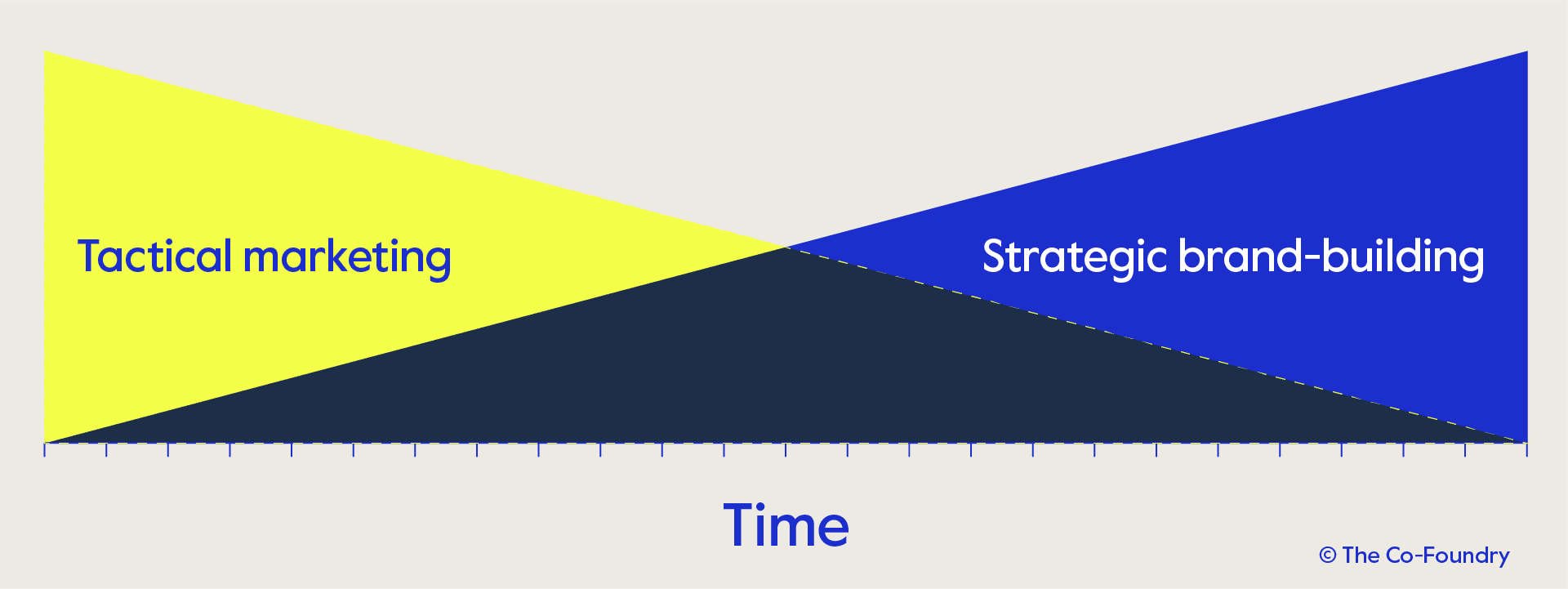
In his book The Brand Flip, Marty Neumeier recommends that you monitor how well your brand resonates with your customers or audience by using a simple survey: the Brand Commitment Scale survey.
Marty Neumeier is the respected author of best-selling brand books such as The Brand Gap and Zag. He has worked with, among others, Apple, Google and Patagonia.

In The Brand Flip, Neumeier describes the scale of ‘brand commitment’ as a ladder. The bottom rung is ‘Satisfaction’ – the customer has experienced your brand product or service and found it to be as expected. The next rung in the ladder is ‘Delight’ – they have experienced a level of surprise and delight with their interaction with your brand, this is the point in the customer relationship where they become loyal to your brand, experiencing an emotional response. Next up ‘Engagement’ – your customer subscribes to your brand tribe “With membership comes increasing loyalty, escalating repurchase habits, and an emotional attachment that goes far beyond patronage”. You know you’ve reached nirvana when your customer has reached the top rung on the ladder: ‘Empowerment’ – they depend on your brand for social status, personal growth or business success. These ‘empowered’ members of the brand tribe attract others, refer with confidence and stand by your brand promise.
From this, Neumeier devised an 8-step survey that measures how you’re progressing on the ladder.
The survey questions and scoring criteria
Each ‘rung’ has two statements; customers are invited to rate their agreement with them on a scale of 1 to 5. These first two scales relate to SATISFACTION the highest subtotal score is 10.
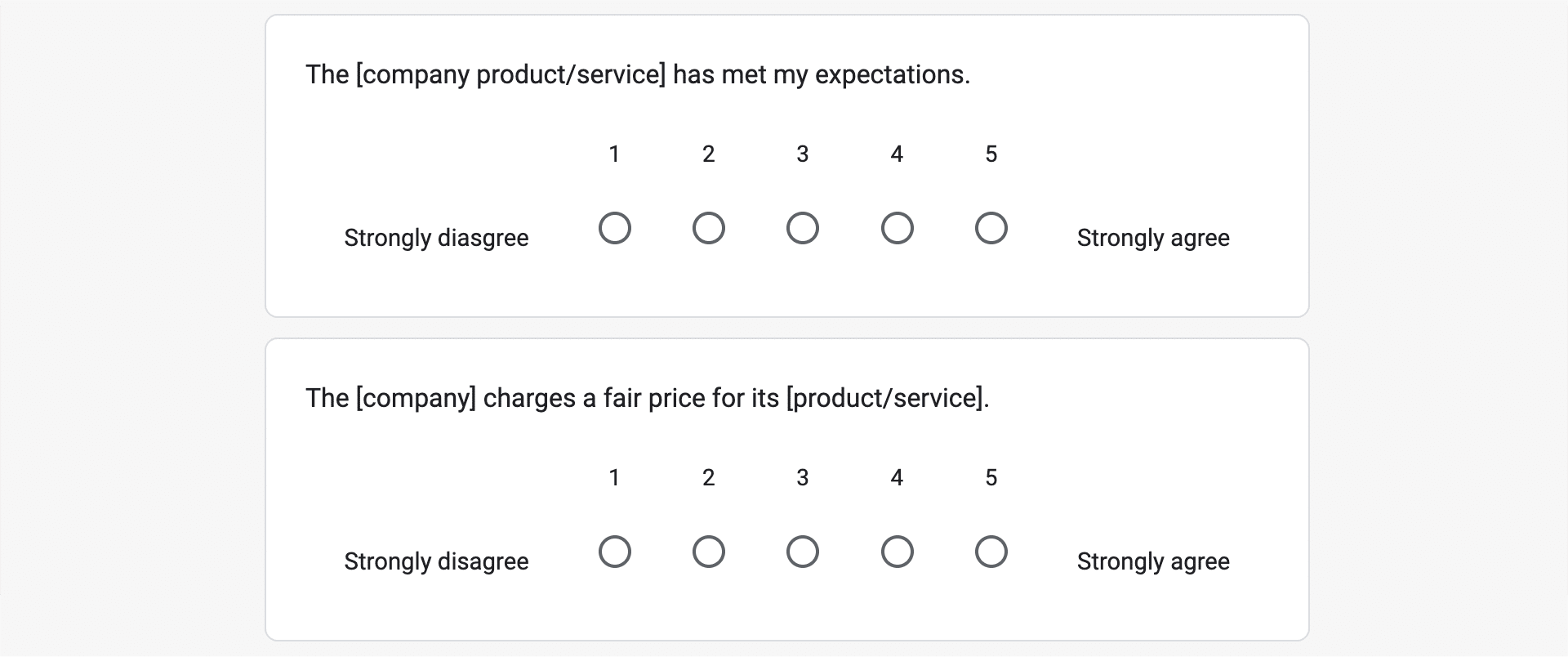
These next two scales relate to DELIGHT multiply the subtotal by 2. The total highest score is 20.
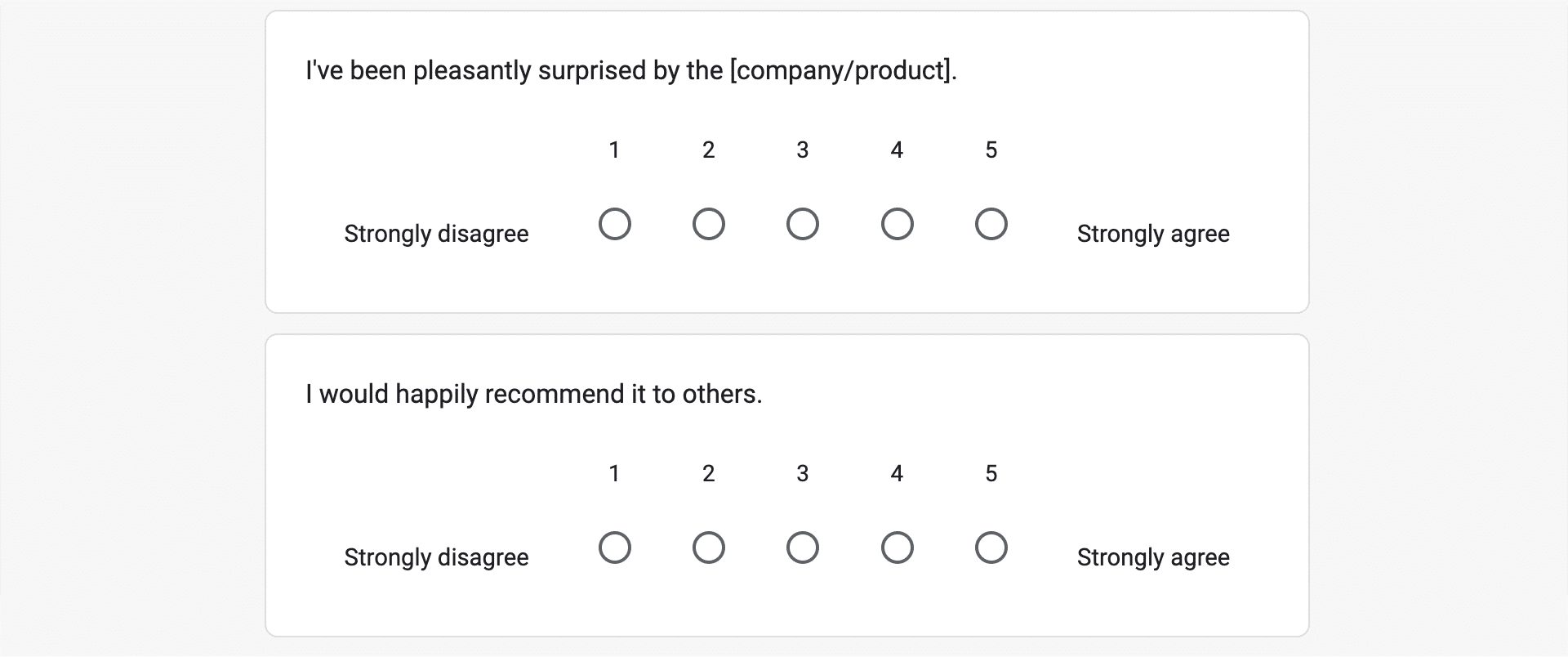
These next two scales relate to ENGAGEMENT multiply the subtotal by 3. The total highest score is 30.
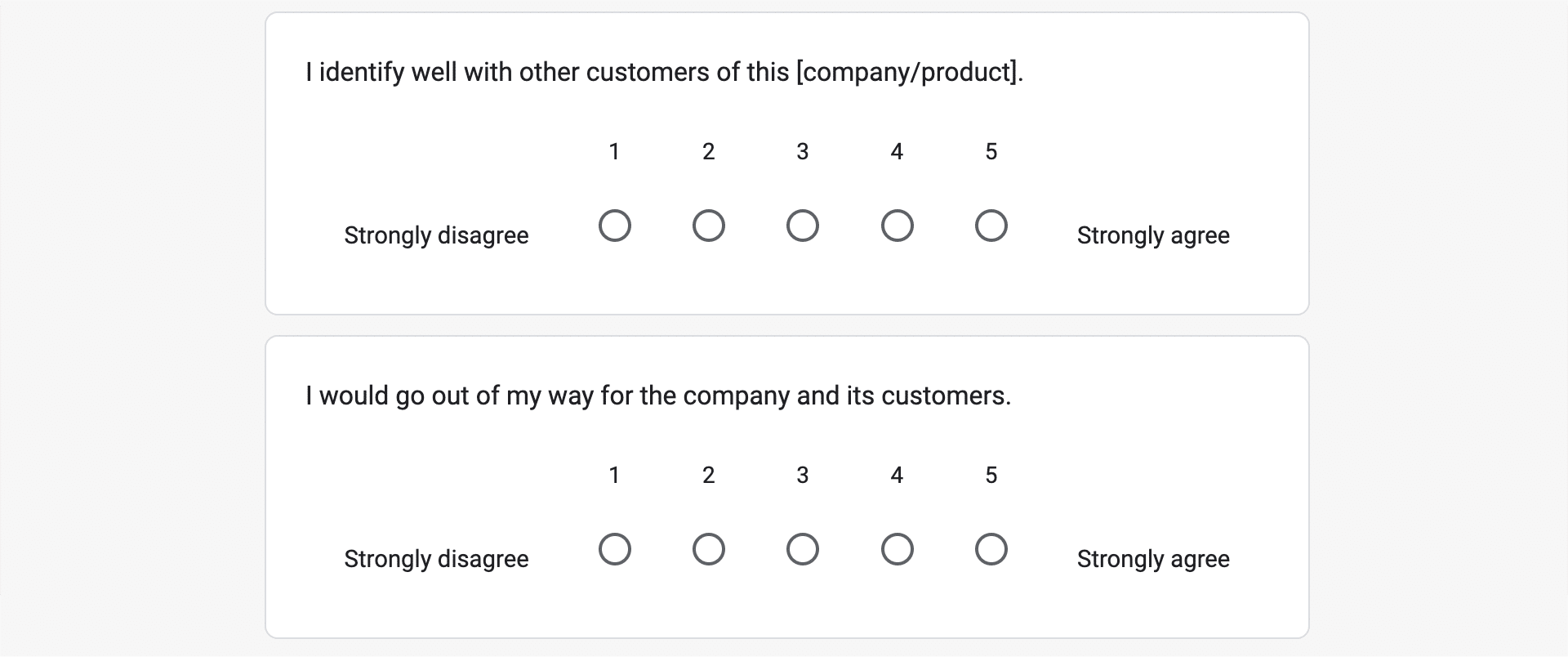
The final two scales relate to EMPOWERMENT multiply the subtotal by 4. The total highest score is 40.
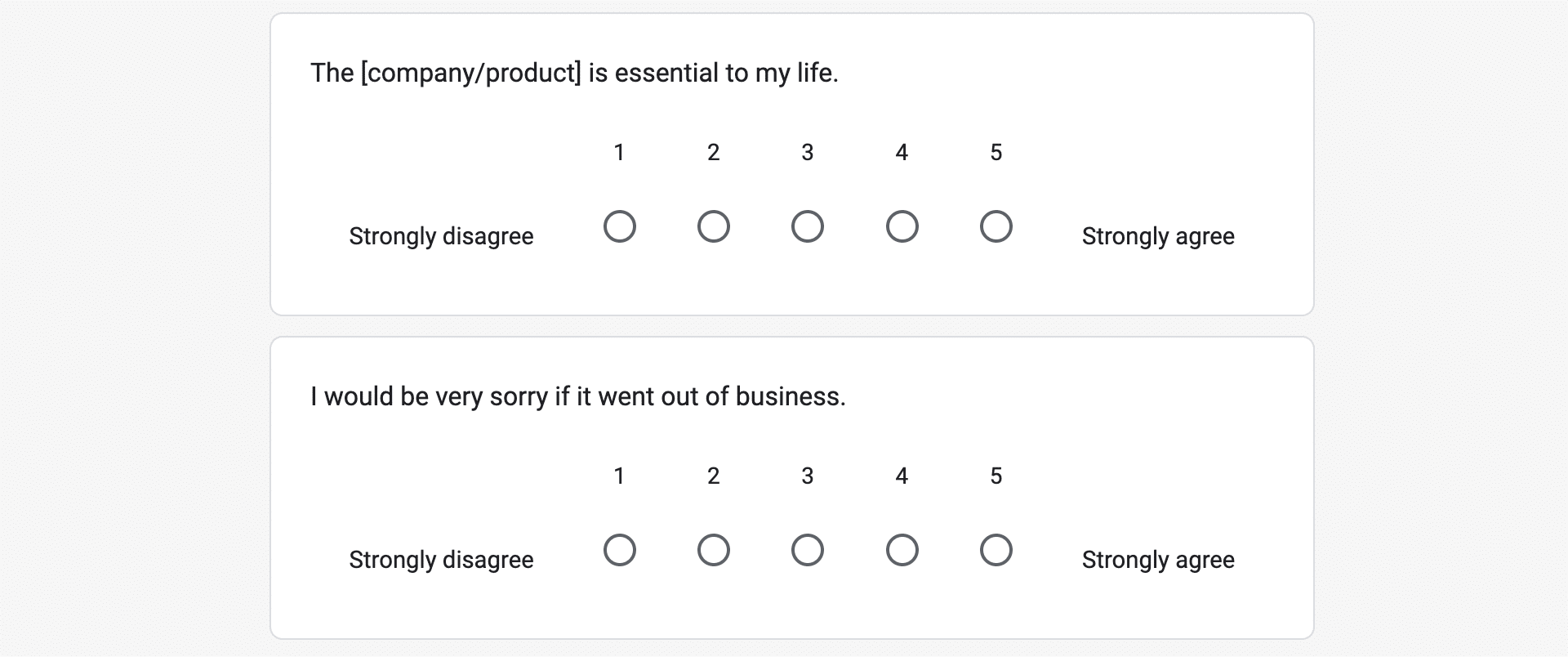
The final highest possible score is a grand total of 100.
Test and test again
Whilst this survey focuses on brand loyalty and there may well be other criteria you’ll want to track, this is a great place to start. By running this test now and again at regular points over time, you can start to measure the effectiveness of your brand-building activity.
The survey and ladder are both outlined in The Brand Flip, Why Customers Now Run Companies – And How to Profit from It
Ride the wave – agile brand positioning for uncertain times

How do you best position your brand when the environment it operates in is constantly shifting? What can you do when you see increasing competition in your sector and know that you have to carve out a clearer position in your target audience’s mind?
Should you be niching down – homing in on the one thing that you believe differentiates your brand from its peers? Or is it safer to go the other way – extending your offering or entering new markets? Surely, casting your net wider means you’ll catch more fish…
You may, quite understandably, be feeling anxious about making any decisions in the current economic climate. After all, why rock the boat when the waters are already choppy? In this post, I show you which elements of your brand strategy should remain fixed and which areas you can be confident about exploring – identifying ways in which you can adopt agile and become bolder in how you think about your brand.
And the best news? If you’re a micro, small or medium business, you have a built-in natural size advantage; think of bigger brands as unwieldy cruise liners, while your own business is, in comparison, a nippy sailboat, able to effect a manouevre in a fraction of the time.
(Apologies for all the surfing and seafaring references – they’re a bit of a theme with this post!)
A word on Agile:
Agile embraces situations as they unfold, making decisions as necessary, to stay on track towards those goals, even adapting goals as you go.
It’s based on the idea that things tend to have their own life cycle of usefulness and if that life cycle remains unchanged it goes out of date and becomes ineffective. This means there’s a need to be improving and developing continuously to disrupt this natural life cycle before it enters decline and causes disruption itself.
Hold fast
The elements of your brand that remain its solid and unchanging core are its foundations (let’s assume here, that you’re already clear on these) – your brand purpose, mission, vision and values.
The brand personality traits that fed into these and inform your day-to-day communication are also well-known and understood by your team. You’ll naturally be regularly checking in with these strategic statements – making sure that your mission is being delivered, your values are being followed across all customer and employee touchpoints, and that your branding and tone of voice remain on point.
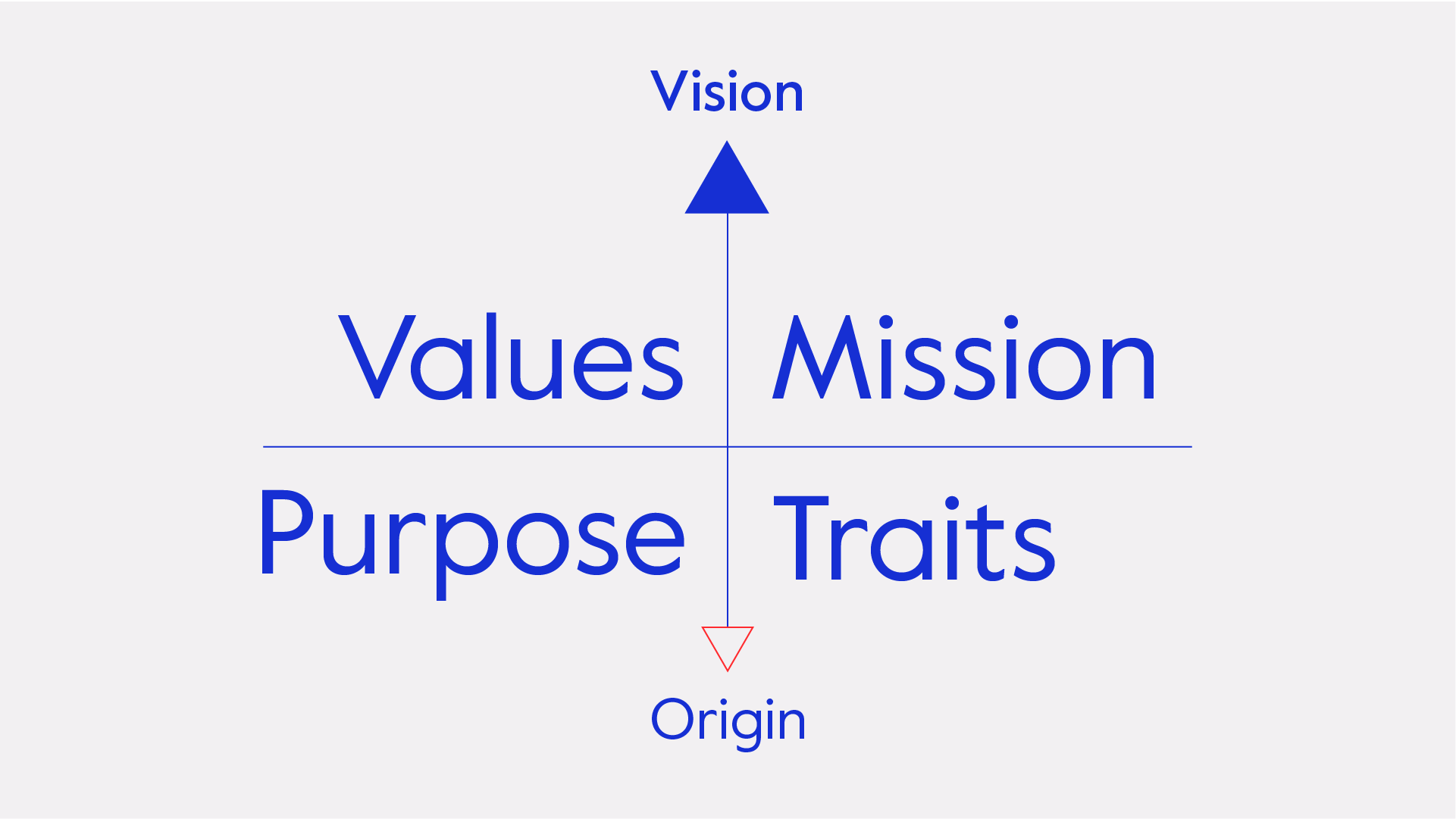
So, if these elements of your brand remain solid and unchanging, what can you flex so that you’re able to maintain your edge and continue delivering on your mission?
Examine what’s changing
Taking its lead from that famous saying, ‘If we want things to stay as they are, [i.e. your business maintaining its position in the marketplace] things will have to change’ – let’s start by looking at what might be changing around you. You may well have a clearly defined position, but competitors are moving into your space:
- Sounding and looking a lot like you
- Offering services that seem indistinguishable from those that you provide
- Servicing the same sectors
Your ownable space – the brand moat I wrote about here – is being threatened.

In this instance, it’s time to consider your positioning. You’ll be looking to adjust one or two coordinates to ensure you maintain that clear, ownable space while also taking other, external factors into account – both those that present challenges and those that offer opportunities.
External forces that may be at play:
- Innovations – both within your sector and in the world at large, including the impact, both current and future, that developments in AI create
- Pandemics (not something we might have thought of few years ago)
- Trends
- Economic and geopolitical pressures
- Government regulation (for those of us operating in Europe, issues around Brexit are still very much on the agenda).
The above forces aren’t necessarily negatives, change can, and does, bring opportunity. Also, very importantly, revisiting your positioning means taking into account and reviewing any internal changes that might be moving you towards reorienting your brand:
- Development of new IP
- Mergers and collaborations
- New talent joining the organisation, expanding skill sets.
Adjust your position
Once you’ve objectively reviewed the environment you’re operating in, identifying all the factors that might indicate that it’s time to adapt your positioning, take time to consider your selling points – how your brand resonates with its audience and where you offer particular value.
This is about far more than having a USP. The term has fallen out of favour as, in truth, very few brands can lay claim to the holy grail of that single USP. It’s far better to think of this as something that’s grown out of the USP concept, a combination of selling points if you like.
Scrap the ‘U’ in USP and try on some of these other selling points for size:
- ESPs – Expert Selling Point – can you credibly claim some authority in your market?
- OSPs – Originator Selling Point – were you the first in your category or did you have a memorable start to your brand journey?
- VSPs – Values Selling Point – is how you deliver your service or product different?
- NSPs – Narrative Selling Point – can you tell a story that pitches you as the hero
- PSPs – Personality Selling Point – do you look and sound distinctive in a bland category?
- CSPs – Community Selling Point – are you super connected, is your brand a key player in its network or category
- SSPs – Size Selling Point – are you unusual in your category?
This is by no means an exhaustive list… there are many other ways to show the world you are distinct and appealing, particularly when you realise that you don’t have to fix on sector and service offering.
Whether you choose to subtly adjust your coordinates to accentuate your edge in one or more of these SPs or take a bolder view, pivoting and going all-in on one SP, what you want to do is navigate your brand towards an updated, well-defined and memorable positioning – the antithesis of lookie-likie generalism.
Naturally agile
Strategy, very much like a brand, is essentially a creative exercise. In an uncertain, dynamic environment it can be likened to surfing – you put yourself in a position to not only ride the waves of opportunity, but have a hand in creating them – defining and shaping new directions for your brand.
Adopting an agile mindset for your brand strategy and homing in on what can be flexed and refined prepares you for change and helps you keep your options open. Even more crucially it can alter how you understand change, seeing it not as a barrier or limitation but a path towards the adaptations you need to make.
Although it’s very much a customer-focused approach where you’re not afraid to keep on reviewing, testing and adjusting, being crystal clear about your non-negotiables and staying true to your brand values is equally important. In the words of Basecamp founder, David Heinemeier Hansson:
…it’s about running a business in a way you can feel proud about. And the only way to do that consistently is by not A/B testing your core values.
