
Are you a maverick or a magician? People’s champion or rebel?

Why is it that, even if you’ve only just met them, you find yourself warming to some people more than others? Why does one person make you feel reassured, while another remains difficult to fathom?
Our brains are wired to constantly minimise the effort that’s needed to make decisions. We make judgements based not only on appearance, but also on our pre-existing beliefs about how personality works. And it’s the same with brands – we subconsciously apply human attributes to them and these help us decide when we’re trying to choose one brand over another.
In the discovery and creative process of our brand consultancy work we spend a lot of time finding opportunities to humanise a brand. Introducing human characteristics, however subtly, adds to a brand’s emotional appeal and helps carve a distinct identity. There are a number of ways of doing this but key among them are projecting personality and telling a compelling story.
Making your brand more human
Always on the lookout for injecting new ways of thinking into B2B branding, we’ve spent the past couple of years using a brilliant tool that really gets the creative juices flowing. It helps you approach your positioning with a fresh new mindset and offers the potential of telling your brand story through a narrative lens that you can make your own.
The challenger brand strategy, put together by the team from global consultancy, Eatbigfish, was originally developed with D2C brands in mind, but we saw no reason why it couldn’t be applied to B2B brands or indeed the charity sector. D2C shouldn’t have all the fun! (Incidentally, if you find that this tool doesn’t work for you, there’s another approach you can choose at the end of this post.)
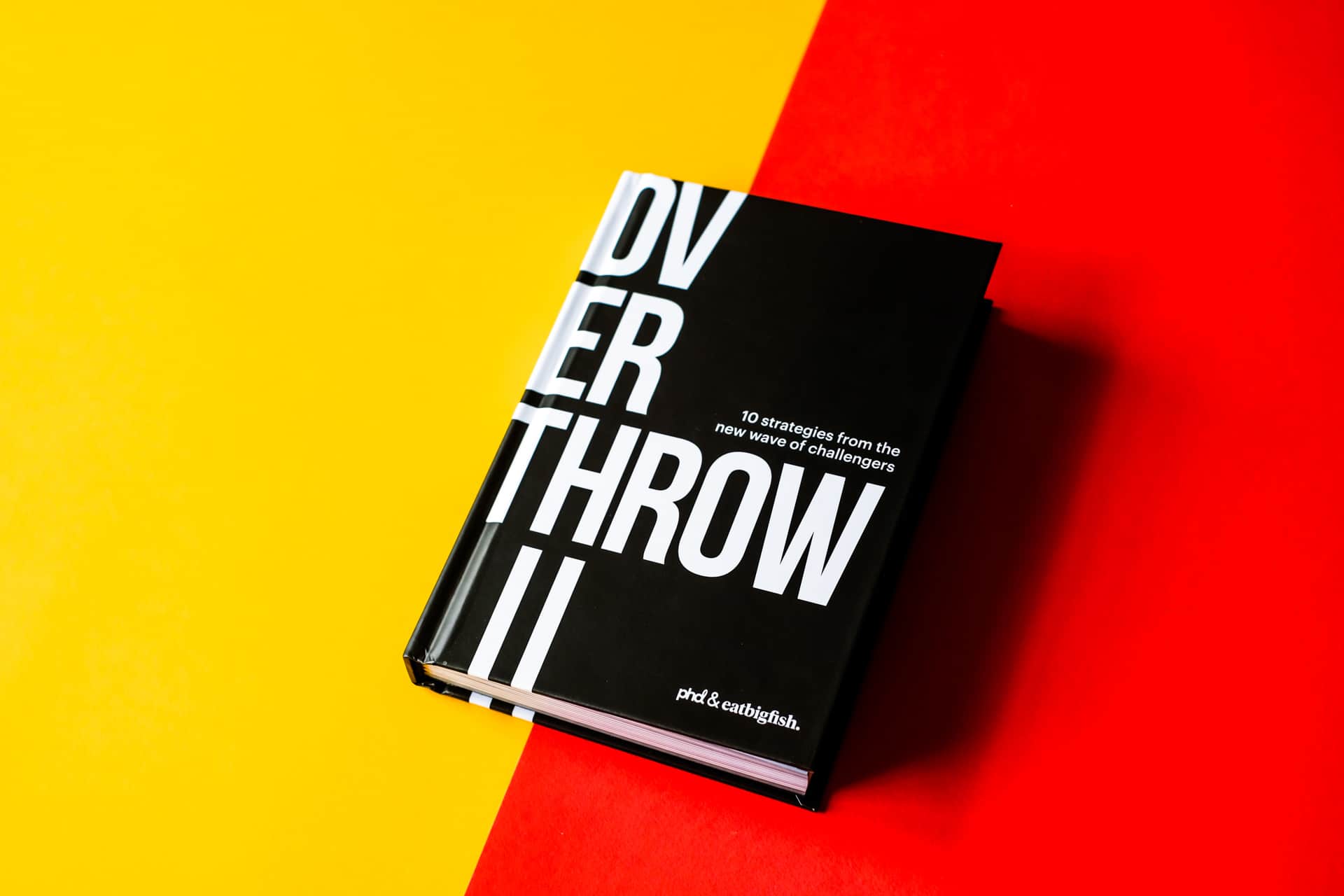
The 10 types of challenger brand
This strategy works particularly well for brands that are underpinned by genuine passion and a strong purpose, and are seeking to be distinctly different from their peers. It engages you in some deep questioning that helps you get to the nub of not only what, but also ‘who’ your brand is. You may be shifting perceptions in your marketplace and challenging the norm but is that because you’re standing up for underserved audiences or because you’re at the forefront of a new generation of products or services? Do you zig while the rest of the world still zags? Interestingly, it’s not all David slaying Goliath (although that is the main thrust of the more binary, ‘small vs big’, ‘us vs them’ Feisty underdog strategy):
Feisty underdog
People’s champion (identifies an underserved sector and offers people-powered, community-driven solutions)
Next generation (capitalises on changing times, positioning itself as ideal for a new and emerging era)
Democratiser (focuses on accessibility and diversity, making what was previously available to only a few, accessible to all)
Local hero (reflects the renewed appetite for localism and local solutions)
Real & human (see ISL Case Study below)
Missionary (driven by a strong sense of purpose, often founded on indignation at the status quo)
Enlightened zagger (happy to swim against established norms, explicit about the shortfalls of the status quo)
Dramatic disrupter (seeks to upend the category it’s in, offering something significantly superior and going big on drawing attention to itself)
Irreverent maverick (uses wit and humour to challenge the status quo)
If you see your brand in any of these strategies you can then go on to use it as a creative jumping off point that has the potential to develop real standout in your brand concept, look and feel, tone of voice, messaging and content marketing.
Here’s an example of how we used the Real & Human strategy in our recent rebrand of recruitment company, ISL Talent.
What does Real & Human mean?
The Real & Human Challenger archetype sets out to appeal on a personal and emotional level. It positions a brand as rooting for its customers and caring about what its customers care about. Although being community minded and doing social good are also trademarks of Real & Human brands, these areas should be handled with care so as not to overtake or distract from the main brand message.
Real & Human brands challenge the dehumanising forces of industrialisation, or in the case of ISL Talent, the depersonalising digitisation of their category. For them, people are not just numbers on a spreadsheet and their work is not about pushing CVs and filling roles. Instead their focus is on placing quality people for cultural fit, in companies where they can grow and develop, and help the companies they’re working in grow and develop.
Real & Human capitalises on ISL Talent’s existing commitment to taking a personal approach. Its genuinely nice team prioritises human connection and building valued relationships with candidates and clients alike. This challenger strategy sits in stark opposition to ruthless, ‘numbers game’ and the faceless, algorithm-led recruiters. In the B2B arena, it’s an approach that’s typified by MailChimp, while Innocent Drinks makes for a good example of Real & Human in the B2C sector.

Delivering the Real & Human Challenger
With its competitors choosing to take a strong stance on sustainability, ISL needed to distinguish itself in a clear brand space that played on its strengths and was communicated consistently across all of its messaging, the company website, sales decks and content marketing.
We delivered the Real & Human strategy for ISL Talent by dialling up the sense of real care and personal dedication they put into everything and placing that centre-stage. The idea of ‘brand’ in itself, deliberately took a back seat to ISL being presented more as a group of people united by their commitment to constantly do better for the people they serve – building partnerships rather than completing commercial transactions.
Being able to demonstrate how Real & Human percolates through into how ISL treats its own people played an important part in delivering the strategy. Showing the real faces behind the brand added to the credibility of the Real & Human approach, while communicating how ISL’s staff are well supported, have autonomy and lots of opportunities to grow and develop their careers ensured that prospective clients had a window on something that would resonate with them. When clients come to ISL Talent they find a recruitment company staffed by people they can relate to and work with.

The classic Brand Archetypes
If you can’t see your brand through any of the 10 challenger lenses then there is always another tool at your disposal – the classic Brand Archetypes model which provides you with a list of 12 archetypes (or combinations of archetypes – maybe you’re a combination of Sage and Magician?) which you can use to apply human attributes to your brand.
The subject of countless articles, this approach, introduced in Margaret Mark and Carol S Pearson’s 2001 book, The Hero and the Outlaw: Building Extraordinary Brands Through the Power of Archetypes, builds (as does Eatbigfish’s work) on the very human tendency of using symbolism to understand concepts that was identified by psychiatrist, Carl Jung.

Inspiring creativity
Creativity never takes place in a vacuum – it thrives on stimulus. Like many strategists and creative directors I love using short cuts like the challenger strategies and brand archetypes to get the creative process under way. Tools such as these help you develop a deeper understanding of your business and the drivers behind it, taking you back to first principle thinking and making for a solid foundation from which to create a distinctive brand.
Branding or marketing – What comes first?
Does this sound familiar? Your to-do list never seems to be getting any shorter. There are so many areas you need to cover, including those outside your comfort zone or beyond the scope of your expertise. Keeping on top of everything is proving challenging.
Taking a balanced approach and carving out time to make sure you pay at least some attention to every item sounds like a recipe for success. But, when it comes to branding and marketing (in this case we’re particularly focusing on marketing communications), this approach is one that doesn’t work so well.
Putting it all in order
When you’re talking about branding and marketing communications there is a definite order of things. Although they’re closely related and should, once your brand is established, enjoy a symbiotic relationship, your business will do much better if they’re tackled separately by specialists.
As they’re both terms that have become assimilated into the everyday, it’s helpful to go back to basics – remind ourselves of what they mean, unpick how they differ and outline how you can best get them working in tandem to help your business grow.
What is branding?
The act of branding defines who you are as a company. It’s why you’ve come into being, the need you fulfil, who you serve, where you sit in the market, what makes you special and your vision for the future. As such, it gets communicated through any variety of touchpoints, from your logo and brand style guidelines, to your website and how your staff show up for your customers. It also covers how you create an emotional connection with everyone who comes into contact with your business.
Although you’ll have been involved in shaping your brand, once it’s out in the world, it also becomes what your customers perceive it to be. Your brand, and from that your reputation, gets built by all the interactions – digital, human and everything in between – your customers experience with your company.
As Jeff Bezos has been quoted as saying,
A brand is what people say about you when you’re not in the room.
What is marketing communications?
Marketing communications is generally understood to be the strategies and tactics you employ to actively promote your company and its offering. It’s the actions you undertake to build awareness and deliver your messages online and offline. It includes channels, tools and processes such as email, social media, content, pay per click, influencer, broadcast, video and print.
How they differ and what comes first
Often bundled together, branding and marketing communications fulfil very different functions in your business. Branding is how you define who you are and what you stand for, marketing is how you utilise and draw attention to that brand as a driver of the long and short-term goals of your business.
So although it’s easy to get tangled up in the ‘which comes first, chicken or egg?’ conundrum, in this case it’s pretty simple: Because it sits at the heart of, and informs your marketing communications strategy (and indeed the direction of your entire business), branding has to come first.
Working with a brand specialist
We’ve already established that your brand is an important driver of your business’s performance. Businesses that enjoy sustained success over the decades invariably have a strong brand that acts as a single organising principle – creating an ownable space which unites what they do, with how they do it and how they’re perceived.
Because branding is so strategically important, working with a brand consultant gives you the means of taking that crucial bigger picture view of your business as well as the marketplace and wider context that you operate in.
A branding exercise should be collaborative – done with you, not to you. A brand consultant will gather research and insights from across all your company functions in an inclusive way. Your audience, the people you serve, are placed at the centre while your teams are involved from the start. And the very process itself opens you up to sharpening your company purpose and being supported to embed meaningful values your team can live by.
It’s only by undertaking this thorough exercise that the design element – the most visible aspect of brand identity (all too often mistaken for the whole) is able to align your brand positioning with its creative expression.
Bringing it all together
With a strong brand identity in place, something they can really get behind, marketing communications specialists, working across a range of disciplines including advertising, PR, content creation and social media are then able to make the most of your brand to promote your business’s long-term strategic objectives as well as delivering on shorter-term, sales-led goals.
In this way, brand strategy cuts across all facets of a company, determining internal behaviours, affecting outward appearances and driving outcomes. In the words of branding expert, Robert Bean, a brand is so much more than a ‘nice to have’, it’s a mission-critical, competitive weapon that done right, will drive the success of your business.
Employer branding – how to make your brand values matter
A brand identity is not just a customer-facing asset. It has a significant role to play for you as an employer, especially when your tech or creative firm is looking to build or grow its team.
When you’re creating your brand identity, you distil down to your brand DNA by defining your brand values. But of course, defining them is just the start, because values only become meaningful when they’re brought to life. After all, what use are values that no one can remember or relate to in their day-to-day?
Far too many businesses that I work with admit to having spent money in the past on a consultant that helped them define and articulate their vision, only for that precious document to gather dust and get forgotten.
So how can you make sure that doesn’t happen to you? How can you embed your firm’s values not only within your organisation, but also to the people who matter to you in the outside world?
How can you communicate your values to prospective new talent so that they feel attracted to you as an employer and understand them enough to be able to self-qualify themselves before making their first approach?
Employees stay with companies whose values they find resonate with theirs and consumers stay with brands whose values they resonate with and who show that they are valued.
Rishad Tobaccowala
A five-part framework
Following this five-part framework to make sure your values resonate with your team, has the added benefit of those values also being meaningful to your clients, stakeholders, prospects and partners.
Define → Test → Articulate → Embed → Communicate
Define
Let’s start at the beginning. Making sure your team gets involved in defining your values will get you on the right track. When you were starting out with your business, its values came from you and were inextricably linked to your personality and aspirations. When you build a team around you – that link loosens – you no longer have control over how people answer the phone, how they conduct themselves in meetings, how they make decisions or how they act with their colleagues.
Conducting a company-wide survey, where you gather every team member’s top three values, is a great starting point. Once everyone’s contribution is in, you workshop the values, either as part of a wider brand discovery session or purely as a self-standing values exercise. What you’re looking for is a shortlist of values you could see yourselves getting behind. Ending up with four or five values is a good rule to stick to – it’s not too short as to be too basic and not so long that you’ll never recall them.
Interrogate the values you’ve come up with:
- Are they distinct, authentic, compelling?
- Does each of the values help you stand out as a brand?
- Can the value be brought to life in the way you and the team behave?
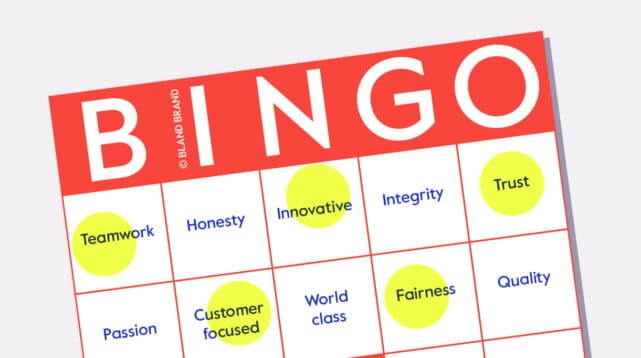
TIP: Choosing ‘bland’ values rather than brand values is what, all too often, can cause you to fail at this first hurdle. One good way of checking the merit of a value is looking for its inverse. Is what you’re putting forward really a value or just table stakes? Take ‘Professional’ – are there really ever instances when you wouldn’t act professionally or would choose to work with someone who values a lack of professionalism? Values such as ‘Honest’ and ‘Innovative’ (and the list goes on) fall into the same category. This is not to say that the words themselves can’t be values, just that they require more unpacking and a more nuanced approach which can come from working them into a short phrase.
Test
People like to do business with people who share their values. So, as well as being relevant to your team, are the values you’ve come up with meaningful to your customers or clients? Are they more likely to make them do business with you? A solid brand discovery process involves testing how your values do in the real world through customer interviews where you find out what your customers value and care about.
Articulate
Who am I to question the likes of Lego? But on the face of it, their values – six single words – seem a little simplistic. I don’t doubt for one minute that there’s more behind them than what they share publicly online (possibly whole chapters dedicated to each in their brand book) but using single words like this can leave too much open to interpretation and doesn’t provide enough to inform your team’s day-to-day actions.
imagination, creativity, fun, learning, caring and quality
In contrast, the way John Lewis & Partners expresses their values provides a great ‘doing’ benchmark:
Do right: We act with integrity and use our judgement to do the right thing.
All or nothing: We put everything we have into everything we do.
Give more than you take: We put more in, so everyone gets more out.
Be yourself. Always: We’re quirky, proud and at our best when we are free to be ourselves.
We not me: When we work together anything is possible.
Pay particular attention to, and invest in this stage. Bringing in a copywriter, one that specialises in brand development copy is a wise move. They’ll be able to craft your values into meaningful, memorable phrases using plain English that truly reflects your brand personality and, if appropriate, using an element of wit. Another valuable approach that effectively bridges that gap between coming up with values and bringing them to life, is coming up with a Manifesto. It’s a really creative way to inject meaning and energy into your values, and comes with the added benefit of providing a source of inspiration for your content marketing strategy, when you’re thinking about blog and social media posts, company videos and email marketing…

Embed
Once you’ve consulted with your team, listened to your audience and fine-tuned how you want your values to be documented, a Values in Action workshop is a great way to further embed them with your team. We run Values in Action workshops for clients to begin ‘living’ the values they’ve developed.
The workshop is a way of getting the team to drill down to what each value means to them personally. Some of the areas we explore include asking why each of the values is so important to the company and what specifically is required from team members to keep those values alive.
Here’s what Alan Furley from ISL Talent had to say about this approach to embedding the values you’ve identified as key to your employer brand identity:
Communicate
Making sure you communicate your brand values fully and consistently across all touchpoints is the final stage of the brand value framework.
Your brand guidelines should always go beyond the visual, with tone of voice guidance capturing elements beyond the obvious. Include real-life examples, tips and suggestions for how to capture your values in how you and your team speak. Your company website is an important port of call for prospective talent – if your values include diversity – demonstrate it in your team photography, so that future employees can see that you truly live your values.
Create a content strategy that is informed by your values. This means having content pillars that reference them – themes you know you need to talk about in short- and long-form posts, videos and talks. Also, don’t forget the manifesto idea mentioned in the ‘Articulate’ phase – it’s a great basis for content that shows you bringing your values to life.
If this post has made you curious to discover how you can define, capture and communicate your values in the day-to-day, or you’re thinking you could benefit from a Values in Action workshop, let’s get talking – arrange a 30-minute, no obligation chat here.
How to define and defend your brand ‘moat’

You want to stand out, be famous in your world for what you and your team do but does the marketplace you’re in feel crowded, even claustrophobic? You seem to bump up against the same people time and again, and there’s a real concern that this will end up becoming a race to the bottom. Perhaps your inbound enquiries aren’t as good as they could be or prove to be badly qualified when they do come in. Does it feel like you’re merely blending in with everyone else? That your brand is a tad too generic – dare I say, even bland?
The answer to this dilemma lies in defining your brand’s ownable space – fine-tuning your positioning and creating a space you can then defend with confidence – your brand ‘castle’ surrounded by the clear boundary of a ‘moat’.
Finding your ownable space
There’s a versatile yet simple tool you can use to test your brand’s positioning. It helps you place the insights you gather – from early-stage gut instinct to detailed findings – under the microscope and guides you towards a space that will see you play to your strengths and motivate your customers.
This will mean that all the messages you send out are the right messages. You’ll discover how to look, as well as act, the part, win more work and maybe even be able to charge a premium. And your prospects will be far more likely to pre-qualify themselves before even approaching you.
Some notes on ‘positioning’
Brand design consultants, brand strategists and business consultants use the term ‘positioning’ freely but often ascribe different meanings to it.
For the purposes of this task I’d describe positioning as your ‘ownable space’, that moat and castle – what you do, or perhaps more importantly what you don’t do, who you do it for, what makes you special (the factor or factors that make you attractive and distinct) and how you want to be perceived.
In the words of Warren Buffet when he’s looking to invest in a successful brand:
…we’re trying to find a business with a wide and long-lasting moat around it, protecting a terrific economic castle with an honest lord in charge of the castle.
[he goes on to say]
…it could be because of its position in the consumers’ mind, it can be because of a technological advantage, or any kind of reason at all, that it has this moat around it.
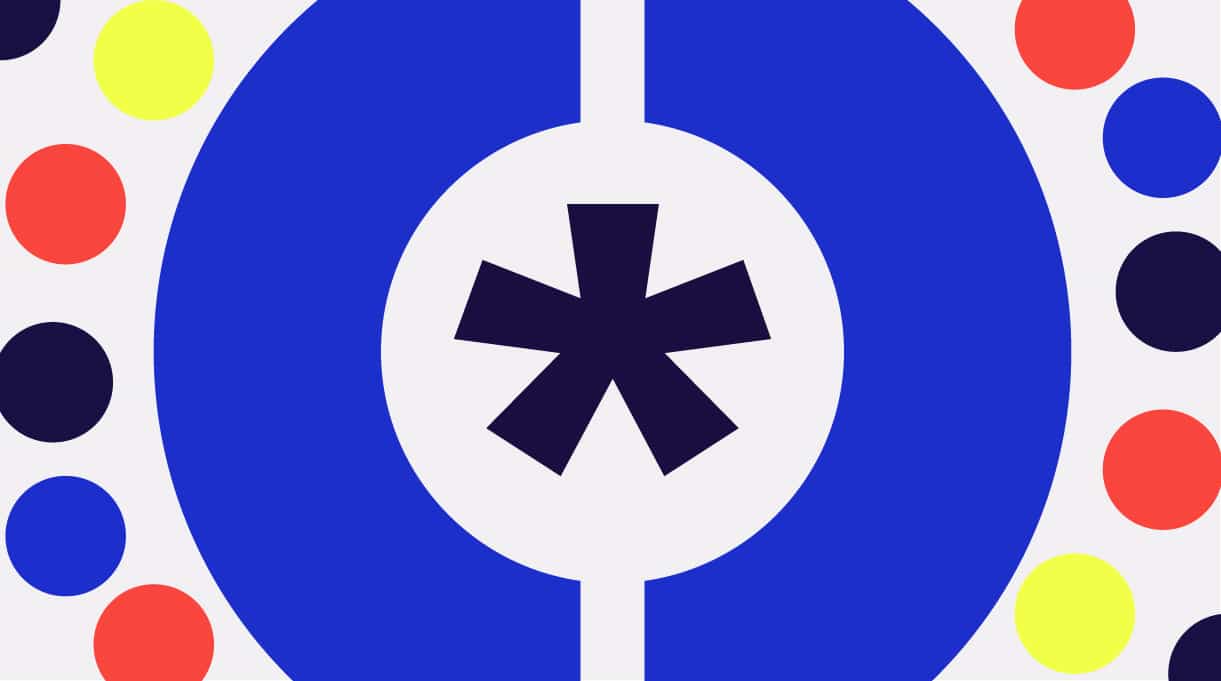
B2B brand owners are often challenged with the question: What’s your USP? Unless you invent a whole new category or hit on a disruptive new model (in which case you can stop reading now!) – one single, truly unique selling point is nigh on impossible in a crowded marketplace. More often than not, you’re searching for a combination of things that are important and resonate with your audience or that protect your space in the market.
For example, you might be the only virtual reality studio that works with mental health practitioners to create workplace learning tools. These points on their own are not unique but combined, they start to give you an ownable position. In this instance: What you are + what you do + niche sector = ownable space.
The steps you need to take
For the purposes of this example, I’m going to assume you’ve done some research – customer listening, a review of where you play and what your immediate marketplace looks like. In an ideal world, you will also have workshopped with your team, looking at what motivates you, your purpose, vision and values. Now you’ll be coming to the table with a bunch of insight and theories that require testing.
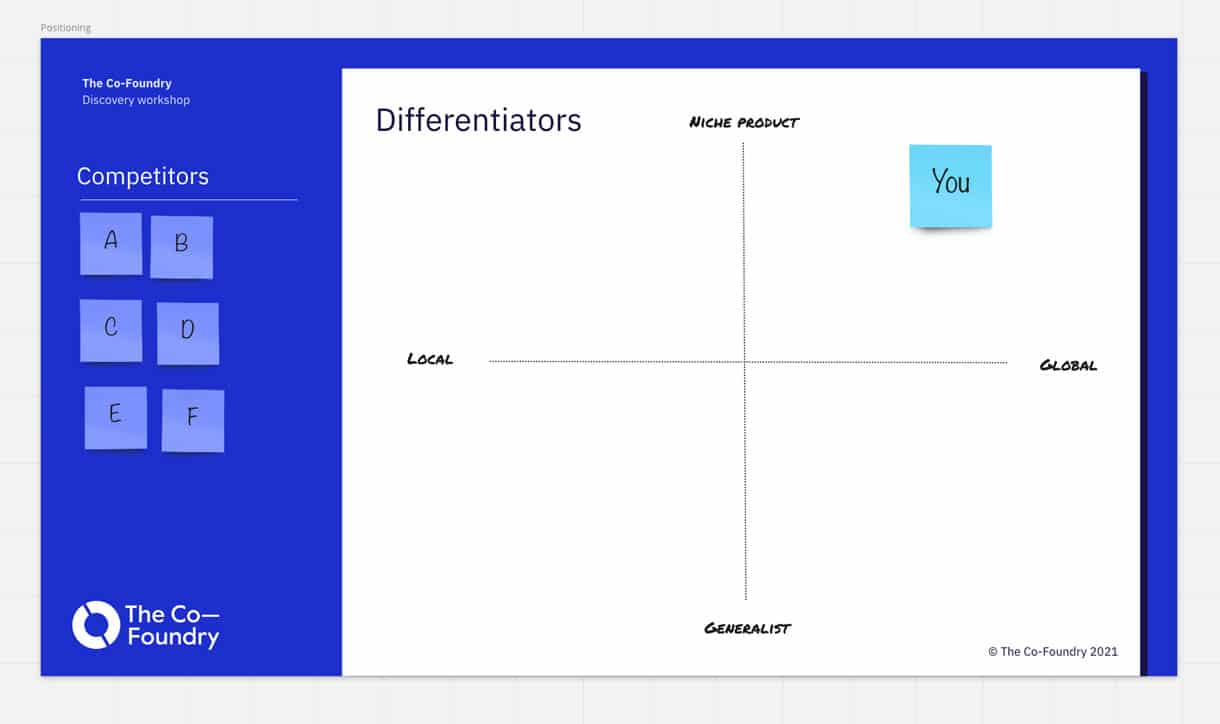
- Draw a 4 quadrant matrix
- Plot 2 of the differentiators you want to test at the top and right.
- Plot the antithesis at the other end.
- Place yourselves on the matrix.
Now plot your competitors – to do this you’ll need a good sense of the messages they’re sending out through their marketing activity, LinkedIn presence and website.
Can you see a clear moat – an impenetrable forcefield – emerging around you or are your competitors still too close for comfort?
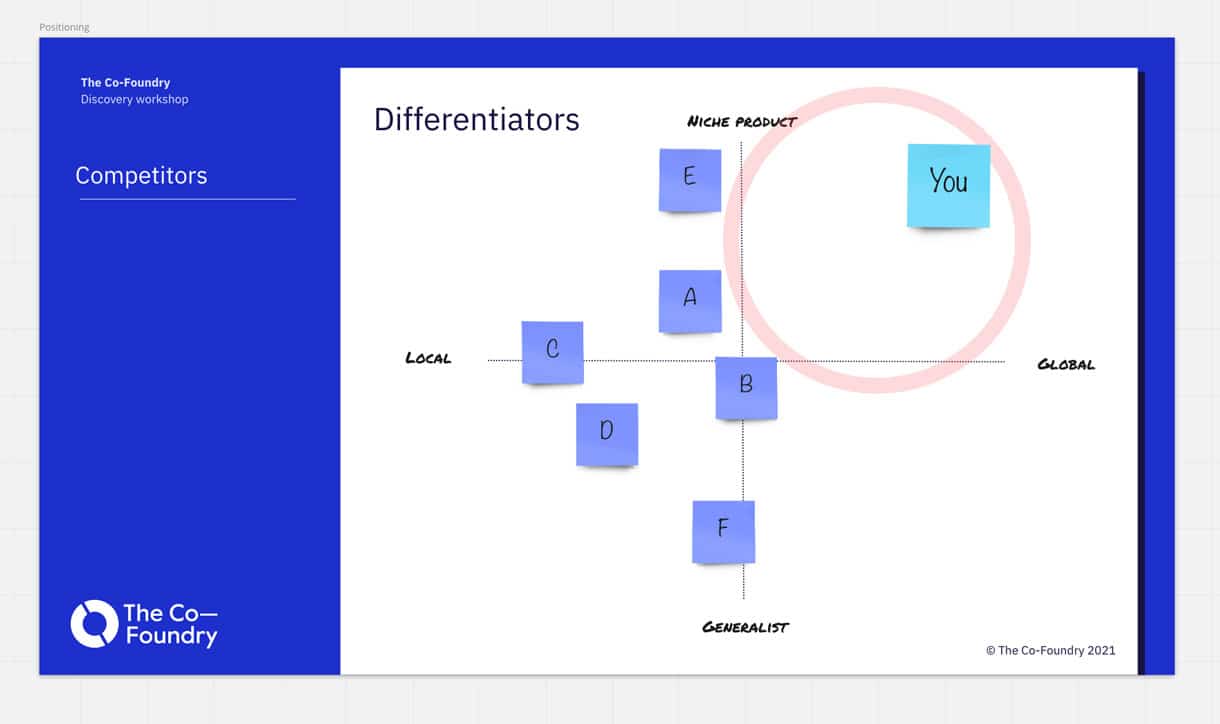
Is your ownable space in the top right quadrant? If it isn’t, what will you have to do to move towards that position?
If your location on the grid is still giving you a feeling of claustrophobia, try different combinations. You may be settling on more than two differentiators or too complex a differentiator in which case you’ll struggle to communicate your position clearly. Keep things as simple and pared down as you comfortably can – single-mindedness is the aim.
How to ‘own’ your moat and castle
You’ve defined your ownable space – the ‘castle’ is yours to protect and nurture. Now make sure you ‘own it’.
Every blog post, comms message, customer interaction and experience should reiterate your positioning. Look the part, tell the story and show the world you have something worth protecting. Highlight testimonials that amplify and offer social proof of this ownable space. What you say, how you look and the experience you give your audience should all tie together to create the uniform whole that is your brand identity.
And before you go, take a look at this case study of Skylark Media who have built that valuable moat around their brand castle:
If you’re a prospect looking to communicate a message focused on sustainability, who would you pick? The generalist film production company who’ll work with anyone or the specialist who shares your values and has a track record and expertise in working with ethical, sustainable brands?
How you can help your team become enthusiastic brand advocates
The days of a brand being only what you, as a business founder say it is, are long over. We’re all aware of the importance of word-of-mouth marketing and customer feedback but the words, actions and attitude of your team are just as significant when your brand is out there in the wider world.
Helping your team become as enthusiastic about your brand as you are, is simple:
Involve them early on in all things branding, including the creative process. The once taken-for-granted practice of excluding client-side ‘non-creatives’ from a branding project, is no longer the way to go if you want to sail a happy ship.
Everyone has a stake
Creatives themselves recognise that they don’t have a monopoly on good ideas. They’re often just more confident about visualising or articulating their vision. They’re also more skilled at sorting the wheat from the chaff but, in order to do that, they need to have ample raw material to work from. A kaleidoscope of perspectives drawn from all areas of your business ensures a more bountiful harvest and a more powerful and resonant branding outcome.
An approach where creatives work behind closed doors, coming in only to present to a client’s top team doesn’t bode well for the long-term health of a brand. Your team, who interact day-to-day with customers, suppliers and stakeholders are vital to your brand and business’s success. Fully on board and feeling like they’ve had a stake in the brand’s creation, they’ll help realise your vision by ensuring it’s clearly communicated at all times and consistently applied across all platforms.
But not everyone gets to drive
Getting everyone involved in the creative process doesn’t mean resorting to the ‘back-seat driving’ we get to witness in the dreaded Branding episode of The Apprentice. Surely, I’m not alone in shouting at the TV when team members tell designers to nudge 10 pixels to the left or try a different font or colour as the design by committee process creaks on!
In this case, involving your team is all about having them in on the process before the creative brief is even written. This way they’ll be playing a part in generating the creative sparks and excitement that will help them understand and feel affinity for the resulting new branding – all the better to then be able to run with the brand tone of voice, create content and play their part in attracting new talent to your business.
It will also mean that you, as a founder, feel included. The business is, after all, your ‘baby’. You may have sketched out its first logo or built the first website, and it’s important you don’t feel you have to relinquish all creative control to the professionals who will come in to create your branding.
Gathering in the harvest – the co-creation session
The ‘gathering’ process I advocate before the creative brief is written is a far cry from a free-for-all brainstorm. It’s a strategically led format, arranged around themes that we, at The Co-Foundry, call a co-creation session. Designed to play to the strengths of, and serve everyone on a team, it offers space for quieter team members to feel confident, included and heard, as well as giving voice to the ‘usual suspects’, the louder people on the team.
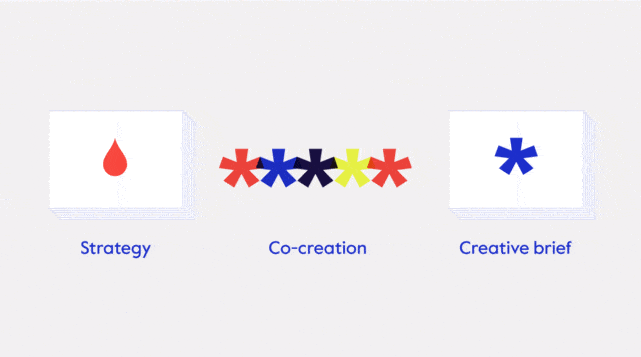
The co-creation session should be held once the brand strategy has been approved and before the designers are briefed. Forming the basis for the co-creation session, the brand strategy is an internal document that distills the key findings from the research stage (team discovery workshops, brand audit, customer interviews, and wider market research).
Setting some homework
The author of the brand strategy or the consultant facilitating the session provides a set of boards for each team member to populate ahead of the session – essentially scrapbooks, mood boards or stylescapes. We use Miro but there are other whiteboard tools. Physical boards can be used too. The session will see us pooling, sharing and discussing these boards. In populating them ahead of the session, individuals should be encouraged to seek out and consider all visual and verbal stimuli, from sketches and photographs to websites – in fact, anything that resonates with the strategic direction that’s been set.

There is no ‘designing’, only gathering at this stage and, far from being a test, it’s an opportunity for eliciting as wide a range of ideas as possible. With people working alone, contributing their ideas individually, no one will feel led towards reaching particular group-think conclusions. References can be rough, raw and broad, or neat, specific and refined. Those taking part should be encouraged to draw inspiration from beyond the sector you operate in, taking in alternative categories and broader trends.
Making a start – mood boards
Although no one should be made to feel they have to fill each of the boards, they should be encouraged to do what they can, trying to put something on each.
Each board is labelled and in our co-creation sessions typically follows the following format:
1. Marketplace context
Competitor audit – likes, dislikes, common themes, clichés. The brand strategy already sets out what your ownable space is and this is a good opportunity to make sure no one else is stepping into your defined space.
Category audit – this may be the sector you are in, the category you serve or an alternative category that shares a common trait or archetype. While the objective of brand identity design is to be distinct and memorable, your strategy may have established that your brand could benefit from mirroring or finding parity with a category. This is the point at which you might identify common tropes, use of colour, typography style, imagery and visual references that could then be included in the brief.
2. Creative territories
This is when the team involved in the co-creation session searches out and posts up visual stimuli that will then help the designers explore the creative territories defined by the brand strategy.
An example: Let’s say the strategy has defined a brand as a challenger / disruptor – setting a creative territory of ‘counterculture’. The response might include exploring the visual language of disruption – dissident political slogans, flyposting, the anarchy symbol.
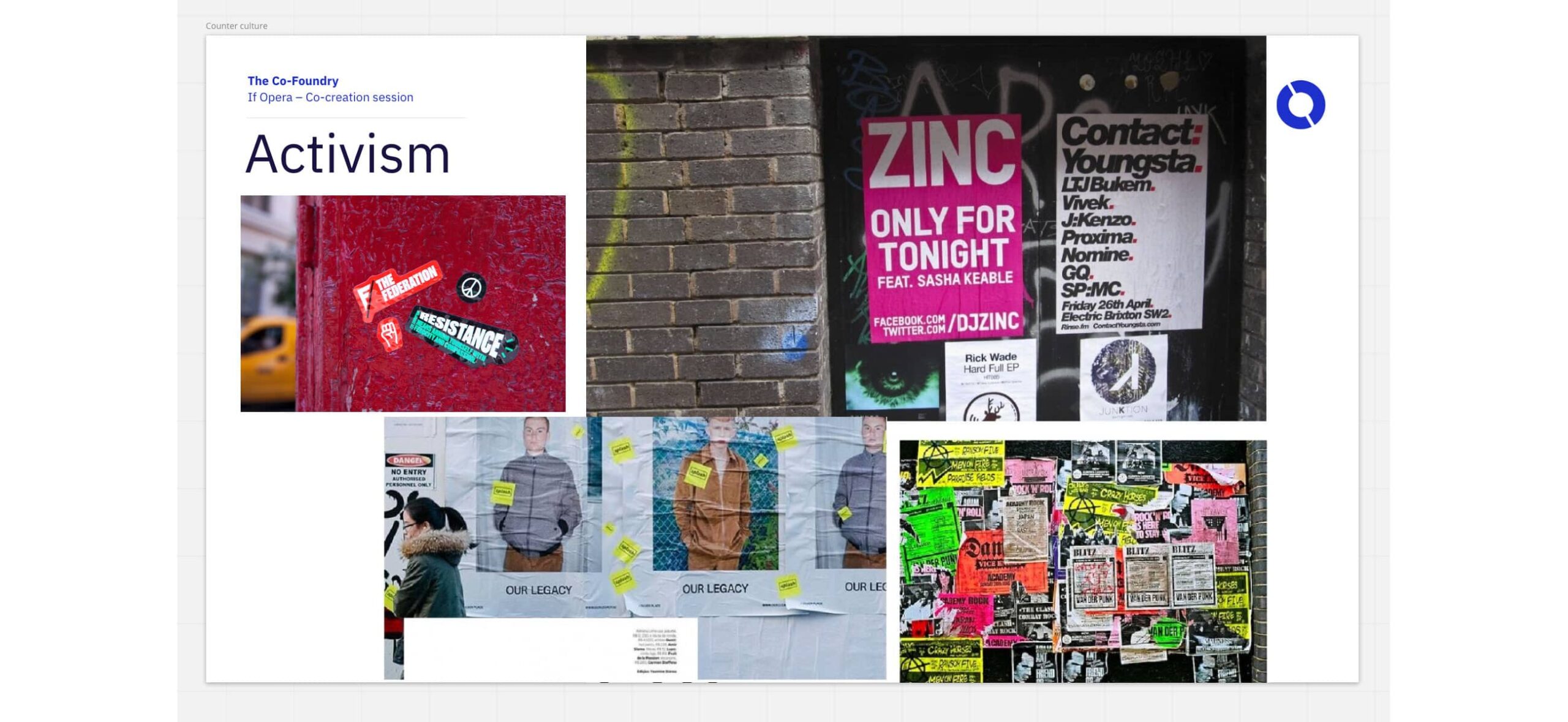

For The Co-Foundry’s rebrand of Iford Arts which saw the opera company become If Opera, our co-creation session explored the wider entertainment category including streaming services and West End musicals, as well as themes such as activism and jazz, developing an identity that emphasised If Opera’s reimagining of what opera could be, for audiences and performers alike.
The session itself – enjoy!
Helped along by the facilitator organising the boards into emerging themes, this is where everyone comes together to review and discuss the contributions that have been made, and further refine and tease out some of the thinking. The facilitator will be listening for a response to the boards and although some ideas may be taken off the table, no one on the team should end up feeling that their idea wasn’t given fair air time or due consideration.
If it feels messy – all the better! A positive and playful atmosphere, laughter and fun are very much called for. As adults we don’t get to play nearly enough and this environment, where everyone has a chance to relax and feel free, brings untold value to the process.
A co-creation session is not, in itself, an attempt to solve the brief, but where you come up with a more coherent framework of references and guide rails, as well as the inspiration that will drive the eventual development of the brand identity.
At the end of the co-creation session the facilitator will have a bountiful haul of material to work from in preparing the brief for the design team. Their eventual brief will pull out key points from the strategy, combining them with a pack of annotated mood boards taken from the co-creation session, as well as instructions on deliverables and first stage concepts.
What makes a good facilitator? A quick checklist:
You need a strategist with a strong creative background including:
- an understanding of typography (What emotions does a typeface evoke? Is it classical, playful, confident, young, different, neat, professional?)
- knowledge of how colour contributes to design
- an ability to recognise the different types of imagery and trends in how images are used (conceptual, documentary/lifestyle, illustrative, hi res, lo res, hand drawn, 3D)
- familiarity with thematic ideas, being well-versed in defining the creative territories that need to be explored
- an understanding of the importance of words/copy in branding (taking into account that some people in your target audience will respond better to verbal rather than visual clues in branding)
- excellent communication skills – pulling together the initial strategy, leading the co-creation session and writing the brief for the design team.
In essence, a facilitator needs to have a nuanced understanding of character and tone, and how the combination of the above goes into creating the desired personality and tone of voice for your brand.
Don’t Rebrand. Refresh.

I’ve realised that I’m prone to using the word, “rebrand” a little too freely. The concept of introducing change to a brand identity is a lot more nuanced and, although I’m always aware of where a particular project sits in terms of scope and desired outcome, the changes clients are after, do in fact cover a spectrum, from refresh to rebrand, and everything in between.
From something as cosmetic as updating with the proverbial fresh coat of paint, to undertaking a wholesale brand refurbishment. The trick lies in knowing when a refresh is all that’s needed and when rebranding is the way to go.
So what’s the difference between them, why should you be refreshing and ringing the changes regularly, and how will you know whether it’s a refresh or a rebrand that you need?
Consistency demands change
First of all change, in business as in life, is inevitable. It’s that idea from Alice in Wonderland of it taking “all the running you can do, to keep in the same place.” and “If you want to get somewhere else, you must run at least twice as fast as that!”
For a more contemporary, prosaic take, marketer and columnist Mark Ritson offers, “One of the core paradoxes of branding: consistency demands change” and “Time makes fools of all the brands that stand still.”
Unless you’re in the business of consumer staples such as pasta or toilet paper, your customers and prospects are rarely in a position where they can buy from you all the time. This means that you need to take a long view – where what you offer can, in the minds of your target audience, build up recall and reputation over time, staking its place front of mind, when the time is right.
It’s one of the reasons why brand and branding is never a one-off exercise – markets, categories and sectors are in constant flux. And yes, even toilet paper manufacturers update their brands!
To refresh or rebrand – that is the question
A brand refresh is, in the main, a tactical manoeuvre while a rebrand is a strategic repositioning of your brand that results in the creation of a new brand identity.
So, although sometimes a radical change is necessary, very often a brand refresh can, despite being largely cosmetic in nature, have a profound and wide-ranging impact on your business.
What a refresh can and cannot do
A brand refresh can include updating your visual and verbal identity – from modifying the logo design, colour palette, typography and taglines – to refining your marketing strategy, tone of voice and marketing materials.
Informed by external factors, it also responds to how your business is evolving internally. Properly executed, it helps you stay relevant and memorable, building on the brand equity you’ve built up while cementing that all-important competitive edge.
What it can’t solve are issues arising from there having been a fundamental shift in offering, positioning and/or audience, or if the branding introduced at the start-up stage was developed at pace, not given enough consideration and has long since been outgrown. This is when a comprehensive branding overhaul, a rebrand, is called for, redefining what you stand for (your values), who you are and who you serve as a company.
A case of refreshing not rebuilding
A good example of a brand refresh would be Housing for Women. As well as needing to breathe new life into the brand and raise their profile, their brand ident, with a logo far too detailed to render clearly at small sizes, was technically no longer fit for purpose in this more digitally focused world. An update was required to make it more flexible.
The environment the charity operates in had changed significantly since their branding was first developed. In the past, they’d needed to concentrate on educating the public in the problems facing vulnerable women. This meant that the look and feel of their material was somewhat dark and ominous. Updating meant taking a more positive view on the transformative effects of their work by presenting a bright and optimistic face to the world.
An evolutionary process rather than a complete change – the name stayed the same and the motif in the logo was retained and refined – we created a colourful and flexible system that gives the marketing team enough room to play with while keeping brand identity consistent.

Who’s the refresh for and why?
Brand goodwill is hard earned, especially in noisy marketplaces, so consistency brings its own reward. If you’re considering a brand refresh always remember who you’re doing it for and avoid change for change’s sake. Although a refresh is largely a tactical endeavour it does need to originate from a place of sound strategic reasoning.
“Feeling like a change” or happening to glance over your shoulder at something new in your marketplace is rarely good enough. Whether initiated by a founder or the result of team members who might perceive things to be stagnant, these sort of starting points lead to random acts of branding. Such brand extensions, new sub-brands and stand-alone marketing campaigns can threaten to throw you off-course and away from the value embedded in your strategic positioning and codified in your brand guidelines.
Creating in-built brand resilience
Brand guidelines themselves should always be designed to allow some flexibility. If they’re not too restrictive, they’re more likely to be adhered to and will offer room for manoeuvre and periodically introducing those refreshes and updates.
Making time for taking regular strategic pauses will help avoid random acts of branding. Regularly reviewing where your brand stands, how it fits in its space and assessing the market, (for example, asking if there are new challengers on your patch) will prove invaluable, particularly if you’re able to introduce that all-important outside perspective by working with a brand consultant.
And of course brand guidelines themselves often need updating after they’ve been handed over to the internal team for application. Until a brand system is stress tested in the field, i.e. applied to real-world scenarios that any designer would be hard-pressed to have made allowances for, it’s difficult to know what works and what might need further refining. Keep a live record of findings and factor in a six-month review with the design team.
Updating the past
Step back, understand it again, and then step forward with a brand-new version of the past.
Mark Ritson
Some say you can’t rewrite history. But history, unlike the past, is a live discipline that’s constantly being reinterpreted by historians who construct it in the present. It’s only natural that just as our understanding of the world changes, so does our attitude to the past.
Similarly, with brands, a refresh doesn’t erase what went before but builds on it, reassessing and updating what’s established because, as iconic film star, Lauren Bacall said,
Standing still is the fastest way of moving backwards in a rapidly changing world.
Unlocking creativity

First of all, let’s clarify a few things about creativity: Anyone can be creative.
Definitions abound – it’s variously described as a skill, a mindset, a practice, a perspective and a belief. It supports all sorts of other skills such as problem solving, critical thinking, collaboration and learning. According to New York Times bestselling author George Anders, it sits somewhere in the middle of the continuum between “very teachable skills and…practically unalterable traits.” Creativity happens across all fields of endeavour. And the idea that it’s a gift – is nonsense.
Perhaps most encouraging of all however, is the fact that ‘creatives’ are no more creative than anyone else. They’re perhaps just more comfortable with expressing the thoughts that come into their heads.
Training that creative muscle
Creativity lies at the heart of so many things, from the development of world-changing innovation, to helping us understand ourselves and the world around us, better. But where do ideas come from? How can you become more creative?
And how can you get better at cultivating the sort of conditions that will help you tap into your creativity on demand?
Do deep work
This goes much further than the concept of diligently applying yourself to a task or “doing the work.” Getting under the skin of whatever you’re working on, reading and researching around it, and becoming fully immersed creates something Cal Newport, in his 2016 book, Deep Work: Rules for Focused Success in a Distracted World, referred to as “cognitive depth.” Ideas may come to you during this immersive research stage or, as is so often the case with me, all the various strands you’re taking in at this time will, once ruminated upon, and when the time is right (in the shower or when walking the dog, for example), result in breakthroughs.
Damian Newman’s The Process of Design Squiggle illustrates this process beautifully – conveying the journey from research and discovering insights (the messiness and uncertainty) through to the design solution (focus and clarity).

Collaborate
Co-creation is central to how The Co-Foundry works, so I’m a big fan of this idea of coming together with others in a bid to fuel creativity. It’s a concept that runs through ad agencies’ long-held tradition of pairing creatives from different disciplines, such as copywriters and art directors, so they can spark off and support one another. And it doesn’t even have to be as formal as that. Collaborations, particularly if you tend to work solo, can be much looser and more ad hoc. Joining something such as a networking hub or an initiative like the Content Writing Club can provide much-needed inspiration and support.
Gathering, discussing and comparing perspectives is a powerful way of getting the neurons fizzing and recognising how and when patterns emerge. Even when it doesn’t seem that productive, co-creation feeds the Research & Synthesis mêlé, so it’s never a waste of time. Although brainstorming also falls into the collaboration category it does tend to favour the loudest and most dominant voices, and the pressured environment can make some people freeze.
Seek solitude
Although very few of us have a lodge in the Outer Hebrides that we can escape to, making time for ourselves, quieting the internal and external natter, and disconnecting from technology is an important element of any creative work. Fine artists in particular, argue it’s vital and when solitude is a conscious choice, that distraction-free time when you’re alone with just your thoughts, should feel more nourishing than lonely. I find that building quiet periods into my week enhances other areas of my creative practice.
Relax
Being able to navigate and manage the stresses of life – large, small and everything in between – plays more of a role in creativity than you might think. It’s well documented that stress, the very opposite of relaxation, kills nerve cells in the hippocampus, the area of the brain where new memories are formed, and new memories are what help us make connections with other things, fuelling the creative process.
Relaxation through practising meditation, mindfulness, yoga or breathing exercises, in fact anything that removes stress, helps us think more clearly and improves our ability to pay attention – something that’s key when we’re trying to find creative solutions.
Sleep
There’s a reason people say, “sleep on it.” Getting enough sleep and the very act of sleep itself plays a part in creative problem solving. Scientific experiments indicate that in REM (dream phase) sleep, the brain replays memories helping you extract meaning – patterns and lessons – from them. In non-REM (deep or dreamless) sleep, the brain then connects those more recent memories to things you already know, helping you come up with novel ways of tackling problems.
Although I haven’t consciously experienced solving problems through dreams, there are plenty of stories around that attest to this phenomenon including that of Larry Page whose anxiety dream led him to create what became Google and Dr James Watson whose dream of a spiral staircase in 1953 resulted in his developing the idea of a double helix spiral structure for human DNA.

Rather than dream states, I find the hinterland between consciousness and finally dosing off for the night and those early moments of the day before I’m fully awake, particularly lucid. It’s when your frontal cortex is free and unrestricted, and not performing its usual task of helping steer you through social norms and moral values. Uncensored and unmediated, you’re far more likely to come up with new and interesting ideas (that you then have to rush to make a note of).
Walk
Do you feel you do your best thinking when you’re out walking? If so, you’re not alone. From the days of the Greek philosophers, much has been written on the deep, intuitive connection between walking and thinking, that “curious link between mind and feet” (Ferris Jabr in The New Yorker, “Why Walking Helps Us Think”).
Moving under your own steam frees your mind and encourages creative thinking. Researchers at Stanford University (Oppezzo and Schwartz, 2014) found that it was the very act of walking, where you’re using multiple parts of your brain simultaneously, and not so much the environment you move through, that made the difference. Their research found that creative output increased by some 60% when people walked, either outside or on a treadmill – and the positive effects of a walk continued for a short while once the person had sat down again.
I knew there was a reason for all those walking meetings…
Be curious
Texas-based bestselling author of illustrated books about creativity in the digital age, Austin Kleon has a great take on curiosity, “Be curious about the world in which you live. Look things up. Chase down every reference. Go deeper than anybody else – that’s how you’ll get ahead.” His weekly, Friday newsletter embodies this spirit of nourishing your mind, eyes, ears and soul.
As children we all possess an innate sense of curiosity – asking “why?” and seeking out knowledge and new experiences. Over time we may gradually lose this sense of wonder but we should make an effort to question things and ensure we’re always being open to learning because this is how advances, both big and small, happen.
Proceed with caution
It’s well known that drugs and alcohol loosen inhibitions, and have been cited as contributing to many a great idea. For me, caffeine is an everyday necessity – that morning cup is the ritual with which I start my working day. At the other end of the scale, in Silicon Valley, microdosing culture is gaining traction. The US Food and Drug Administration granted two psychedelics, psilocybin (the hallucinogenic substance in magic mushrooms) and MDMA, “breakthrough” designations, meaning they can be clinically researched after showing potential in the treatment of mental health conditions. Although there are those who strongly advocate for microdosing as a way of making you smarter and amplifying creativity, results of studies are mixed and it’s still too soon to draw conclusions on whether it’s a questionable fad, or a low risk short cut to coming up with new ideas.
Embrace constraints
The very act of forcing yourself to free up so you can get creative may sound counterintuitive. There’s a school of thought that believes you’ll be more creative (and so more effective) if you just turn away from planning and focus less on productivity and efficiency, and let things happen organically.
But structure, a sense of order and in fact, constraints (we all know how galvanising a deadline can be!), have been found to boost creativity. Maybe the relationship between doing your best, most innovative and creative work while delivering on time and within budget is more nuanced and less easy to define.
Perhaps the biggest difference comes from the fact that design, of any kind, unlike fine art, has to meet the needs of its audience. Japanese designer, Hideki Nakajima captures this idea perfectly,
If I was an artist, I could produce something for myself and that would be okay – but as a designer, I need to think about the community around a project.
Yield to the seasons
Katherine May, author of Wintering: The Power of Rest and Retreat in Difficult Times, emphasises the importance of recognising the seasonal aspect of the various strands of your life: “Life meanders like a path through the woods. We have seasons when we flourish and seasons when the leaves fall from us, revealing our bare bones. Given time, they grow again.”
This is an area I find fascinating – if anything, because it explains why you should unhook yourself from that hustle culture idea of constantly being at the top of your game. Sometimes simply lying fallow or being dormant and waiting it out, is the most powerful way to prepare for replenishing that creative well.
How to brief a professional photographer

Briefing a photographer can seem daunting – but a good client brief is what sits at the heart of any set of successful images – and it’s a great way to make sure you’re taking care of your investment in professional photography.
Although different types of projects, such as website, event or PR photography will carry their own specific requirements, covering the following elements will go a long way to helping your photographer make the technical, creative and logistics decisions that will contribute to your project’s success.
The questions you need to cover
Who are you? (i.e. your brand/organisation name)
What is the project?
How many images will you require?
What image formats and sizes, orientation and resolution are required?
What timescales are you working to? (i.e. proposed day of shoot, when you need to take delivery of the images)
Do you have a budget in mind?
Where will the shoot be taking place? (Do you need help looking for locations or talent? If it’s outdoors, are there contingency plans in place in the event of poor weather conditions?)
What usage of the images do you require? (e.g. unlimited usage of all the images)
Put the images you require in context by:
- Providing background on your business – its backstory, values and personality – and the people on your team.
- Having a clear goal in mind for your images: What do you hope to achieve from your photography? Is it to boost brand awareness? Announce a rebrand? Celebrate a milestone?
- Outlining where the images are going to appear: Are the images going to be used on your website or a particular marketing campaign (where they may need to be themed)? Are there any specific needs for text placement on the images?
Provide brand guidelines, including typography, brand colours and any words or phrases you use to describe your company. I always encourage clients to get their brand designer involved in preparing the brief.
Who will the images be aimed at? Who is your audience? (Be as specific as you can about your audience and provide demographics, and remember to consider issues of diversity and inclusion.)
Think about how you want your audience to feel when they see the images:
Do you want them to feel inspired? Confident? Empowered? Thinking about this emotional side of your photography will help the images elicit the response you’re looking for.
Provide examples of photography you like. (Examples, whether they’re from other businesses in your sector, unrelated sectors or stock shots, are a great way to highlight what you’re after, what you like and also what you don’t like.)
A recent shoot for the Science Council
Ahead of the recent shoot for the Science Council at Welsh Water, I worked closely with The Co-Foundry’s brand design consultant, Sue and the client to agree the brand style – ensuring the photography fitted the established brand identity and guidelines.
Aimed at scientists and their employers, the images needed to feel natural, optimistic, diverse and inclusive. I was able to bring in colours from the location to sit beautifully with the Science Council colour palette and to reflect their use of white space in the design.

Commissioned photography has allowed us to tell the complete story of our customers and their journey with us. It’s been so rewarding working with our scientists, sharing their experiences and capturing their smiles.
Charlie Cantwell, Marketing and Communications Officer, Science Council

Provide contact details of the person the photographer should liaise with at your business and contact details for the day of the shoot.
Outline the payment procedure and provide contact details for invoicing.
Communication is key!
Communication and ensuring your photographer has a thorough understanding of what you’re looking to achieve, is key to the success of any photography project. A watertight brief means your photographer can not only accurately reflect your brand, business and people, but will also be able to contribute the creative touches that will make all the difference to the final images.
Rebranding for founder-led creative and tech businesses
Curious about finding out how to best start a rebranding journey? Get clarity right from the get-go by downloading the first instalment of our guide to building a compelling brand – it’s specially designed for small teams. Click here for your free download.
Sign up for our email newsletter, Hot Metal Press – our take on everything branding, from tips and techniques, to news and ideas, fresh from The Co-Foundry every month.
How Touchpoint Design became
The Co-Foundry
Have you heard the one about the shoemaker’s children who had to go barefoot? Or indeed, the architect whose home stayed a perpetual work in progress as he was forever prioritising client work? Many of us don’t draw breath for long enough to give our businesses the benefit of the knowledge and experience we share day-to-day with our clients.
With all the changes the past eighteen months or so have wrought in everyone’s lives and in the world at large, I decided to take a leaf out of my own branding book and turn the spotlight on Touchpoint Design, the studio I founded in 2015. I had a strong feeling it no longer accurately reflected what we were about and the direction we were moving in. Our brand assets, from the name, to the logo and website were beginning to feel out of date and inauthentic.
Putting myself in my clients’ shoes was something I approached with a measure of trepidation. But in fact, it turned out to be an exciting, challenging and enlightening process and I’m sure my lovely clients will benefit from my having sat on the other side of the table for a change!


Starting with the fundamentals
Like me, you might have come to the conclusion that something has to change about your branding. But perhaps you can’t pinpoint exactly what. The Brand Discovery process we create for our clients is really useful at this stage.
It takes you to the heart of your business, focusing on the value you bring to your customers. From all the elements that feed into this value, you can start to distil your brand essence.
It’s usually a pretty simple answer drawn out from what can feel like a messy equation:
What you care about + What your customers/clients/prospects care about (+ where they can be found) = Your Brand Essence.
It looks something like this:
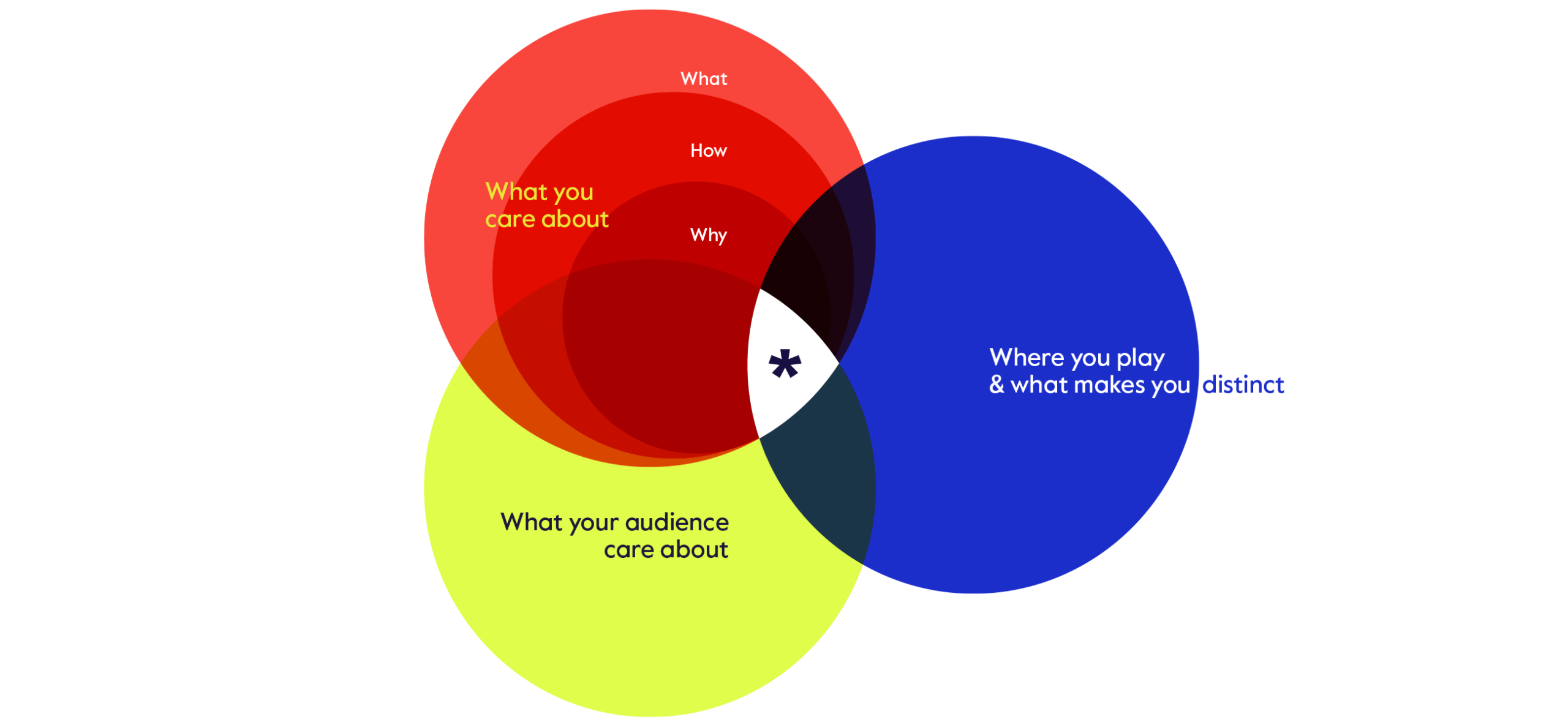
Discovering brand essence
When we find that sweet spot in the centre – the brand essence – the brand strategy becomes all about communicating that position to the people you care about most: your current and future customers, your team and your wider community.
Sometimes this newfound clarity reveals that some radical changes need to be made – that your brand needs more than just new copy, a change of marketing strategy or a visual refresh…that what’s called for, as was the case with Touchpoint Design, is a full renaming and rebrand.
Addressing the ‘What’
Touchpoint Design was an integrated design studio that worked across a range of sectors. With our ‘navel-gazing’ exercise ably kick-started by being part of Janusz Stabik and Robert Craven’s GYDA Mastermind Group, we began to niche down to identify the key sectors we worked in and would be choosing to focus on in the future.
Some changes within Touchpoint, such as members of staff leaving and ways of working being upturned by the pandemic, meant the business itself seemed to be evolving and suggesting a path to how it might best work in the future. To all intents and purposes, ‘we’ became ‘I’ and I started to work as an independent consultant, bringing in some amazing talent to support me depending on client need. A lean, agile and highly expert offering was born.
Uncovering the ‘How’
The new way of working allowed me to refine a brand process that relied heavily on co-creation. This became fundamental to Touchpoint’s ‘new way of doing things’. I believe ideas can come from anyone, and are not just the preserve of the design team. In this way brand identity design can, to a large degree be democratic – not, God forbid, ‘design by committee’ but more coming up with ‘winning ideas by group spark’ – less about ego and more about listening, facilitation and insight.
What I found particularly liberating about this whole exercise was that I learnt to say ‘no’ to work that didn’t fall into our brand essence sweet spot – if the project didn’t start with a brand identity challenge then it would be passed on to individuals and companies that had, in the past, been our competitors.
How defining the ‘who’ can lead you to your ‘why’, revealing ‘what your customers care about’
Exploring this stage called for some additional niching down. It was a case of going deeper and defining exactly who I added the most value to. One of my expert collaborators and friends, Sonja Nisson played an invaluable role here, interviewing some key clients and helping me settle on the ‘who’. This is all about accepting, “that if you want to be good at something (and known for it) you can’t be good at doing everything, for everybody.” (Ben Potter)
The acceptance I came to was that I work best with mission-led founders of creative and tech brands, those “small giants” who “choose to be great instead of big.” (Bo Burlingham, Small Giants, Companies That Choose To Be Great Instead Of Big)
These include an opera company that’s disrupting its category, a ‘tech for good’ charity looking to increase its impact and an immersive animated content studio on the leading edge of innovation in its field. Sharing common challenges, these became my ‘who’ – helping them thrive became my ‘why’.
Finding a name that fits
Touchpoint Design now felt like an ill-fitting shoe and I needed a new pair of kicks!
My years of experience have taught me that trying to be too clever at this stage (e.g. coming up with a pun or in-joke) is rarely the best way to go – very often the best solution is taking the straightforward route. Touchpoint’s new name, The Co-Foundry has a sum all of its own:
Co =
co-creation, with expert collaborators
+ Foundry =
this has two elements to it: The founders who are at the heart of our brand name and a foundry being the place where brands are forged – pouring all the elements and ideas into a bespoke mould and Boom! a new brand being formed.
Final words from the other side of the branding process
A message to all the clients I have put through this ‘pain’ – I salute you for your energy, enthusiasm and openness – it’s not always easy is it? But definitely so very worth it.
If you’d like your inbox to glow with more musings hot off our presses, do sign up to our monthly Co-Foundry Hot Metal Press newsletter – it’s full of tips, insights and ideas on branding and creativity.
